
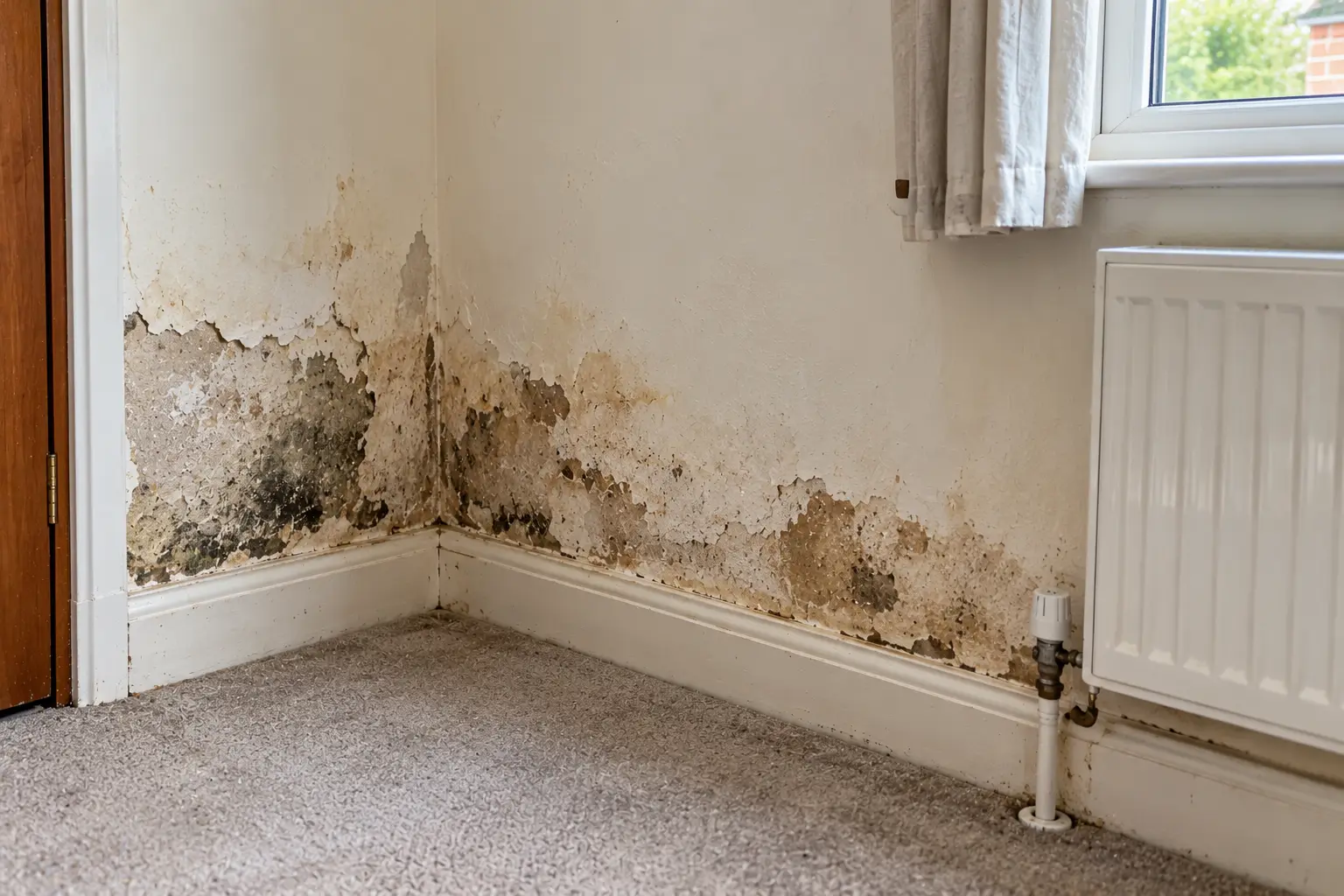
| Rising damp | Condensation | |
|---|---|---|
| Where it appears | Low on walls, up to about 1 metre | Corners, windows, behind furniture, bathrooms and kitchens |
| What it looks like | Tide mark, salty and crumbling plaster | Water droplets, black mould spots |
| When it is worst | Winter, after long wet periods | Cold mornings, after cooking and showers |
| Upstairs? | No – ground floor only | Often, especially bedrooms and bathrooms |
| The fix | New damp proof course and replastering | Ventilation and reducing moisture |
What is rising damp?
Rising damp is groundwater drawn up through bricks and mortar when a damp proof course fails or is bridged. It carries salts from the ground, leaving a tide mark and damaged plaster on ground floor walls.
What is condensation?
Condensation forms when warm, moist air inside your home meets a cold surface. It is the most common form of damp in UK homes, and it is the main cause of black mould.
Why the difference matters
The treatments are completely different. Injecting a damp proof course will do nothing for condensation, and extractor fans will not stop rising damp. A wrong diagnosis means money spent on the wrong work.
Simple checks you can do
- Is the damp only on the ground floor and below 1 metre? Suspect rising damp.
- Is there mould in corners or on window frames? Suspect condensation.
- Are your windows wet every morning? Condensation.
- Is there a tide mark and white salt on the plaster? Rising damp.
Get a definite answer
Our PCA trained technicians use moisture readings and an inspection inside and out to confirm exactly what is going on – free and with no obligation.
Quick answers
Can I have both rising damp and condensation? Yes. Damp walls are colder, which can encourage condensation, so the two often appear together.
Will a damp proof course stop condensation? No. A DPC only stops moisture rising from the ground. Condensation needs better ventilation and fewer cold surfaces.