
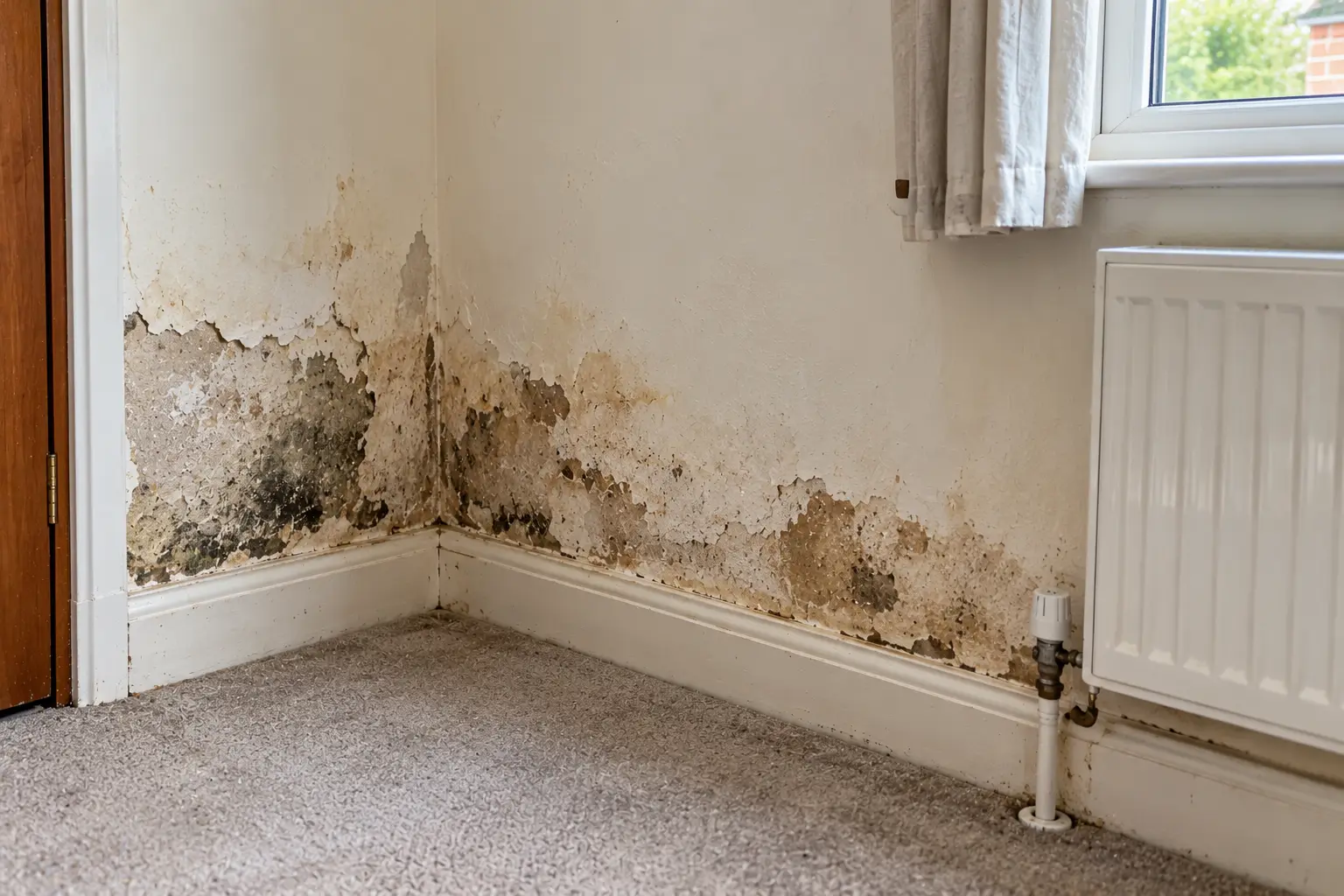
Black mould is unsightly, smells musty and can affect your family's health. Wiping it away only lasts a few weeks. We treat the mould safely and, more importantly, deal with the damp that is causing it.
Why mould keeps coming back
Mould needs moisture to grow. If you clean it off without changing the conditions, the spores simply return. The moisture almost always comes from one of three sources: condensation, penetrating damp or rising damp.
That is why our mould treatment always starts with finding the cause.
Treat the cause, not just the stain
A mould wash or spray kills what is on the surface today, but the stain is only the visible end of a moisture problem. If a bedroom wall stays cold and wet, or rain is getting in through a cracked render, new growth appears within weeks however well the old patch was cleaned.
So our mould removal is paired with a fix for the moisture. For condensation that means better extraction, fewer cold spots and practical changes to how the room is used. For penetrating damp it means repairing the gutter, pointing or render that lets water in. For rising damp it means a new damp proof course and replastering.
If you want to tackle a small patch yourself first, our guides on black mould on walls and mould in the bedroom explain how to do it safely, and our mould removal cost guide explains what affects the price of professional work.
Where we find mould most often
Mould tends to appear where air is still and surfaces are cold or wet:
- Bathroom ceilings and around showers
- Bedroom corners and behind wardrobes
- Around window frames and reveals
- Kitchens without good extraction
- Ground floor walls affected by rising damp
Our mould treatment process
Survey
We identify the type of damp behind the mould and take moisture readings to confirm it.
Safe removal
Affected surfaces are treated to kill mould and spores. Badly affected plaster or sealant is removed and replaced.
Fix the cause
We recommend and carry out the right fix: ventilation and condensation control, penetrating damp repairs or rising damp treatment.
Protect
Where suitable, surfaces are finished to help resist future growth.
Trusted local specialists
We bring over 30 years' experience and PCA trained technicians to every mould problem, and we are rated 9.82 on Checkatrade from 389 reviews and 4.9 on Google.
Mould treatment questions
Is black mould dangerous?
Mould can trigger breathing problems, especially for children, older people and anyone with asthma. It is best treated promptly.
Can I just use bleach?
Bleach may remove the stain but does not deal with the moisture causing it, so mould usually returns.
Do you remove mould from bedrooms and bathrooms?
Yes. These are the rooms where we find mould most often, and we look at ventilation and cold surfaces in each one so the mould does not come straight back.
Will you tell me what is causing the mould?
Yes. The survey identifies whether condensation, penetrating damp or rising damp is behind it, and the written recommendation explains how to fix that cause.
Damp proofing in your area
- Damp proofing in Ruislip
- Damp proofing in Harrow
- Damp proofing in Ealing
- Damp proofing in Wembley
- Damp proofing in Pinner
- Damp proofing in Northwood
- Damp proofing in Ickenham
- Damp proofing in Uxbridge
- Damp proofing in Hillingdon
- Damp proofing in Hayes
- Damp proofing in Southall
- Damp proofing in Greenford
- Damp proofing in Northolt
- Damp proofing in Stanmore
- Damp proofing in Denham
- Damp proofing in Gerrards Cross
- Damp proofing in Beaconsfield
- Damp proofing in High Wycombe