
Written by Seth Long, Damp Pro and Co · Last updated: 7 October 2026
Why bedrooms become damp overnight
Breathing and perspiration release moisture while you sleep. In a closed bedroom, that moisture can build up through the night, especially with two people sharing the room or washing drying nearby.
As the room cools, windows, external walls and corners may become cold enough for condensation to form. Glass makes the water obvious, but a wall can stay damp enough for mould without visible droplets.
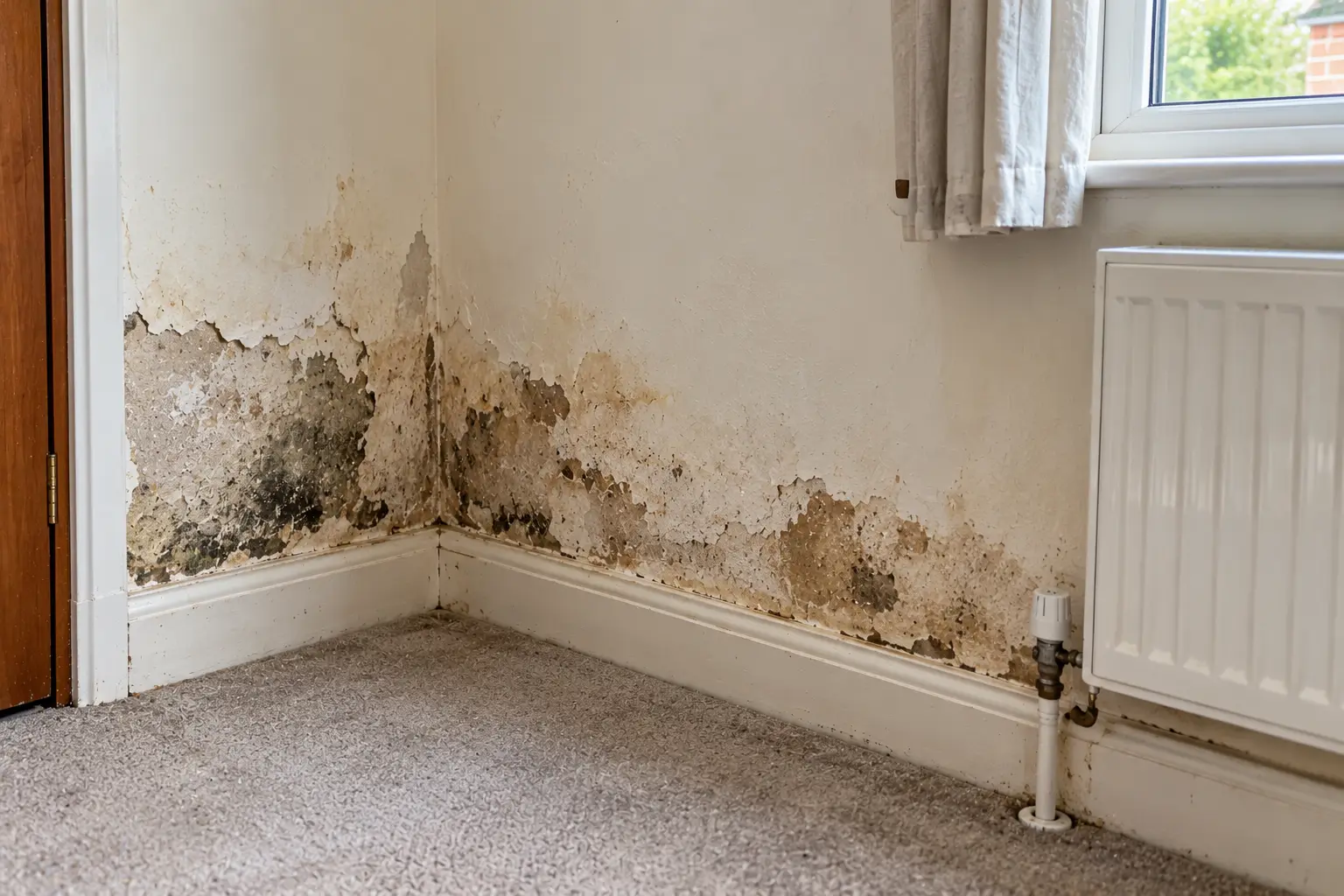
This is not automatically a sign of poor housekeeping. A cold room, limited airflow and moisture from elsewhere in the home can combine, so cleaning alone rarely resolves a recurring patch.
- Check window glass and frames first thing in the morning.
- Look behind the headboard and inside wardrobes against external walls.
- Note whether patches worsen during cold weather or after rainfall.
Check behind beds and wardrobes
Large furniture can trap a pocket of cool, still air against an external wall. A headboard or wardrobe may hide mould until you move it, even when the rest of the bedroom looks dry.
Move furniture carefully and inspect the wall, skirting and furniture back. Avoid brushing or scraping mould dry, which can release spores into the room.
Give the wall some breathing space
Where practical, position wardrobes against internal walls and leave a clear gap behind beds and other furniture. There is no single gap that suits every room; the aim is to allow air to circulate rather than seal off a cold surface.
Avoid overcrowding wardrobes
Put clothes away fully dry and avoid packing them tightly against the back panel. Check shoes, bags and bedding stored low down, where cold conditions and restricted airflow can allow moisture to linger.
Adjust morning window and heating habits
After getting up, wipe condensation from windows and frames, then dry or remove the cloth rather than leaving it on the sill. Open the window briefly when safe and practical, allowing moist air to escape without leaving the room chilled for hours.
Keep any existing trickle vents open and unobstructed. Curtains and blinds pressed tightly against glass can restrict airflow, so open them during the day and check behind them.
Aim for a reasonably steady background temperature, within what you can manage. A short burst of heat before bed may warm the air while walls remain cold; heating alone also does not remove moisture. Our guide to reducing condensation explains how ventilation and heating work together.
Reduce moisture reaching the bedroom
Keep bathroom and kitchen doors closed while bathing or cooking, and use existing extraction where available. Otherwise, humid air can move into a cooler bedroom and settle on its coldest surfaces.
Avoid drying washing in the bedroom if another suitable space is available. If it is unavoidable, ventilate appropriately and keep wet clothes away from walls, bedding and wardrobes.
A dehumidifier may help manage airborne moisture, but it cannot repair a leak or fix a cold wall. A simple humidity meter can help track changes; treat its readings as clues rather than a diagnosis.
Do not assume every patch is condensation
Condensation commonly appears in cold corners, around window reveals and behind furniture. A patch that worsens after rain, sits beneath a pipe or remains wet through warmer weather needs closer investigation.
Penetrating damp, plumbing leaks and other moisture sources can also affect bedrooms. A low-level mark alone does not establish rising damp, and fitting a damp proof course will not solve ordinary surface condensation.
Photograph the area before cleaning and note the weather, room use and any changes. For more on recognising and dealing with wall growth, see our black mould on walls guide.
Treat mould carefully and consider health concerns
Damp and mould can aggravate asthma and allergies. Seek advice from a GP about symptoms or health concerns, particularly if they seem worse in the bedroom.
For a small surface patch, follow the instructions on a suitable mould-cleaning product, including ventilation and protective equipment advice. Never mix cleaning products, and keep children and pets away during cleaning.
Extensive growth, repeated recurrence or mould in mattresses and other porous materials needs further assessment. Do not simply paint over it; address the moisture source and assess affected belongings.
When to arrange a damp survey
Arrange an assessment if mould keeps returning despite changes, spreads, or has no clear cause. Damp Pro and Co offers homeowners a free, no-obligation damp survey across West London and South Bucks from Ruislip.
Our condensation control service covers condensation problems, and we can recommend ventilation improvements. Call 07803 253337 or freephone 0800 593 0300.
Questions about this topic
Why is mould only behind my bed?
The bed may restrict airflow against a cold external wall. Check behind the headboard and move it away from the wall where practical.
Should I leave the bedroom window open all night?
Not necessarily; security, weather and comfort matter. Use existing vents and air the room after waking rather than relying on an open window overnight.
Does morning condensation mean the windows are faulty?
Not by itself. Water on the room-facing glass often reflects moist indoor air meeting a cold surface; moisture between panes is a different issue.
Will turning up the heating stop bedroom mould?
Warmer surfaces can reduce condensation risk, but heating does not remove moisture. Combine manageable heating with ventilation and reduced moisture production.
Can I keep sleeping in a mouldy bedroom?
Avoid prolonged exposure where possible and deal with the cause promptly. Ask a GP for advice if you have asthma, allergies or other health concerns.
Related guides
- Black mould on walls
How to clean black mould safely, why it keeps coming back and how to find the moisture behind it.
- How to stop condensation
Practical ways to stop condensation on windows and walls, from drying washing to extractor fans and ventilation.
- Mould removal cost
The factors behind the cost of mould removal, and why treating the cause matters more than cleaning the stain.