
Written by Seth Long, Damp Pro and Co · Last updated: 7 October 2026
Start by checking the extent of the problem
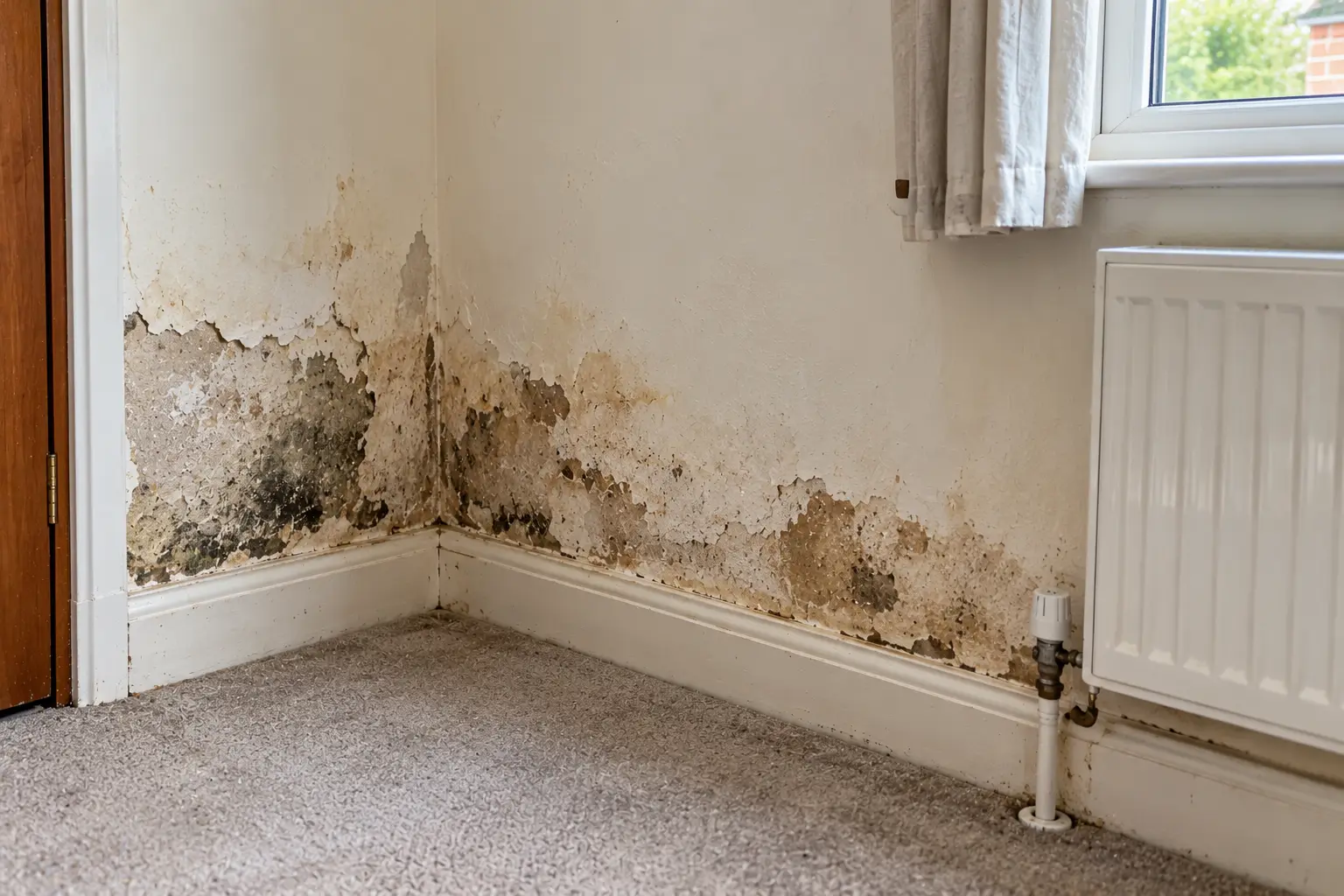
Before cleaning, look beyond the obvious patch. Check behind furniture, around window reveals and along external wall corners, without pulling off wallpaper or disturbing damaged plaster.
A small, isolated area on a sound, washable surface may be suitable for careful cleaning. Extensive growth, repeated outbreaks, crumbling finishes or mould following a leak need assessment; covering the marks will not establish how far moisture has spread.
Keep children and pets away during cleaning. Anyone with asthma, allergies or a weakened immune system should avoid tackling mould themselves and seek advice if unsure about exposure.
- Photograph the patch and note when it appeared.
- Record any link with rain, cold weather, cooking or bathing.
- Check for nearby plumbing leaks without dismantling fittings.
Clean a small patch without spreading spores
Read the mould wash label before starting and check that it suits the surface. Wear household gloves, eye protection and a well-fitting FFP2 mask; ventilate the room to outdoors without aiming a fan at the mould.
Do not dry brush, sand or scrape mould, or use an ordinary vacuum on it. These actions can spread spores rather than remove the contamination safely.
- Move washable belongings away and protect nearby surfaces.
- Apply a suitable mould wash exactly as directed, using the stated contact time.
- Wipe gently with disposable cloths, avoiding vigorous scrubbing.
- Bag used cloths and dispose of them according to the product instructions.
- Let the surface dry fully and wash your hands after removing gloves.
Why bleach and surface cleaning are not lasting fixes
Bleach can lighten staining and affect surface growth, but bleach alone does not solve the moisture problem. On porous plaster, wallpaper or paint, a cleaner may not reach contamination beneath the visible surface.
Never mix bleach with mould wash, vinegar, ammonia or any other cleaning product. Mixing chemicals can release dangerous fumes; use one suitable product according to its label.
Even successful surface cleaning leaves the conditions for regrowth if the wall stays damp. Soft plaster, lifting wallpaper or deeply affected porous materials may need removal and replacement after assessment, rather than repeated soaking with cleaner.
Find out where the moisture comes from
Black mould is often associated with condensation, but its colour cannot identify the species or prove the cause. Follow the pattern of moisture before deciding on treatment.
Clues that suggest condensation
Condensation forms when moist air meets a cold surface. Growth around windows, in cold corners or behind tightly placed wardrobes, particularly in winter, suggests this possibility. Persistent window droplets are another clue, although condensation and other damp problems can occur together.
Checks you can make safely
Look for dripping pipes, failed seals around baths and staining below plumbing. From ground level, check for overflowing gutters or obvious external defects. Note whether patches worsen after rain, and avoid ladders or opening up walls to investigate.
When rising or penetrating damp needs investigating
A patch that becomes wetter after rainfall, especially around a chimney, window opening or external wall defect, may indicate penetrating damp. Water entering the building needs attention at its source; indoor cleaning alone cannot stop it.
Low-level damp accompanied by damaged skirting, plaster deterioration or white salt deposits may warrant investigation for rising damp. Those signs are not proof: leaks, external ground levels and condensation can produce overlapping symptoms.
Black mould alone is not a diagnosis of rising damp. A survey should consider the pattern, building condition and possible moisture routes rather than relying on a single meter reading.
Make the room less favourable to mould
Reduce moisture where it is produced: use saucepan lids, keep bathroom doors closed during bathing and use existing extract fans. Avoid drying laundry indoors where possible; otherwise, ventilate the drying space and keep moisture from spreading through the home.
Leave a gap behind furniture against cold external walls so air can circulate. Aim for reasonably steady heating where practical, while remembering that warmth alone will not remove moisture or repair a leak.
Our guide to how to stop condensation explains these measures in more detail. A dehumidifier may help manage humidity, but it is not a repair for water entering a wall.
Get help if mould keeps returning
Arrange an assessment if growth returns after cleaning, spreads across several surfaces or accompanies persistent damp. Damp Pro and Co provides mould treatment, condensation control and treatment for rising and penetrating damp for homeowners across West London and South Bucks.
A free, no-obligation damp survey is available. We can recommend ventilation improvements; our mould removal guide also explains considerations when planning treatment.
Call 07803 253337 or freephone 0800 593 0300 to discuss the problem. We are open 24 hours, seven days a week.
Questions about this topic
Can I paint over black mould?
Not as a remedy. Remove the growth safely, address the moisture source and allow the surface to dry before preparing it for decoration.
Does black mould always mean condensation?
No. Condensation is a common cause, but leaks and penetrating damp can also support growth. The location and timing help guide investigation.
Should I scrub mould off wallpaper?
Avoid vigorous scrubbing or soaking wallpaper. Mould may extend behind it, so affected paper can need careful removal following assessment.
How quickly should a cleaned wall dry?
There is no fixed drying time. The material, moisture depth and room conditions matter; persistent wetness suggests the source still needs checking.
Will opening windows stop mould returning?
Ventilation can reduce condensation, but it cannot repair leaks or rainwater entry. Combine appropriate ventilation with finding and correcting the moisture source.
Related guides
- Mould in the bedroom
Why bedrooms suffer most: overnight moisture, wardrobes on cold walls and the habits that make a difference.
- How to stop condensation
Practical ways to stop condensation on windows and walls, from drying washing to extractor fans and ventilation.
- Mould removal cost
The factors behind the cost of mould removal, and why treating the cause matters more than cleaning the stain.