
Written by Seth Long, Damp Pro and Co · Last updated: 7 October 2026
Rising damp is moisture from the ground travelling up through a wall. It is often misdiagnosed, so knowing the genuine signs helps you get the right help first time.
Tide marks on walls: what they mean
A tide mark is the visible edge of a damp zone. Below the line the wall stays wet; at the line, water evaporates from the surface and leaves dissolved ground salts behind, which builds up a brown or yellowish band over months and years.
The height of the mark tells you a lot. Rising moisture is held up by capillary action in the pores of brick and mortar, and it rarely climbs much beyond a metre before evaporation balances it out. A mark that sits low and runs fairly level along an external or party wall is the classic pattern. A patch that is high up, shaped like a drip, or that grows after heavy rain usually has a different cause, and you can read more about other causes of wet patches.
Tide marks often come back through fresh paint because the salts are still in the plaster. That is why simply redecorating does not solve the problem.
1. A tide mark low on the wall
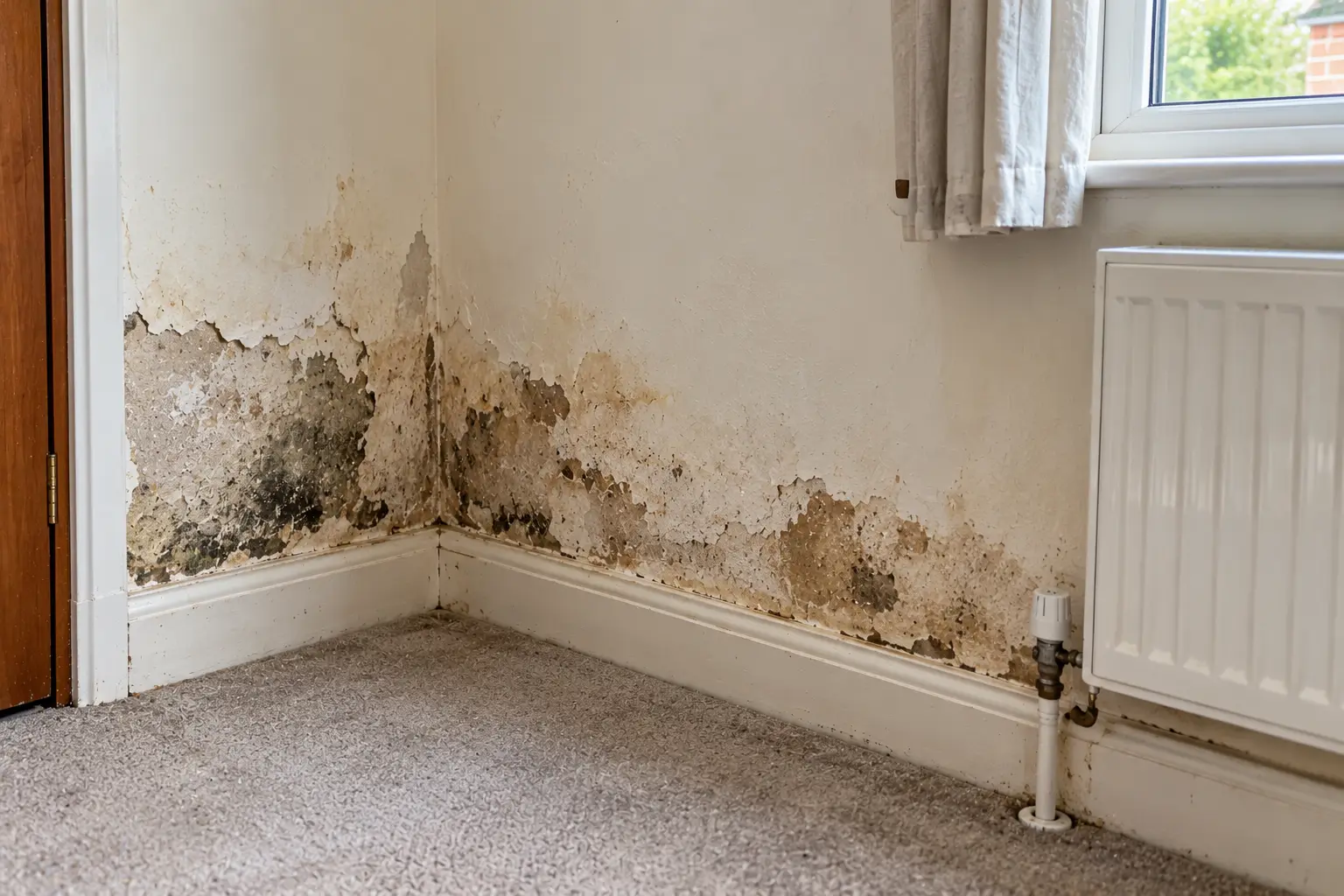
The most recognisable sign is a horizontal stain or tide mark, typically 600mm to 1 metre above the floor. It marks the point where rising moisture evaporates and leaves salts behind.
2. Damaged, salty plaster
Plaster affected by rising damp often turns soft, powdery or blistered. You may see white, fluffy salt deposits on the surface – these are ground salts carried up by the water.
3. Peeling paint and wallpaper
Wallpaper lifting at the bottom edge and paint bubbling low on external and ground floor walls are early warning signs.
4. Stained or rotting skirting boards
Skirting boards sit right in the damp zone. Staining, swelling, soft spots or boards pulling away from the wall all point to moisture rising from below.
5. A musty smell
Damp masonry gives off a distinctive musty smell, especially in hallways and rooms that are closed up.
Check outside too
Look at the outside wall. Can you see the damp course – usually a line of slate or felt two or three bricks up? If soil, a patio or render sits above it, the course may be bridged.
- Ground level should be at least 150mm below the damp course
- Air bricks should be clear
- Gutters and downpipes should not be leaking onto the wall
Is your DPC being bridged?
Many houses with signs of rising damp still have a working damp course; the trouble is that something is letting moisture around it. Raised flower beds, patios laid too high, render run down to the ground and rubble in the bottom of a cavity can all form a bridge. Our guide to a bridged damp proof course shows what to look for outside and why the bridge is removed before any decision about injection is made.
Blown or bubbling plaster
When salts build up inside plaster they draw moisture from the air and slowly break the plaster down. Tap the lower part of an affected wall: a hollow sound, a bulge or plaster that crumbles at the touch usually means it has blown. Paint bubbling over the top is a common early sign. Our guide to blown plaster explains when it points to damp and when it is simply age, and why salt-damaged plaster is replaced after a new damp course.
What it might not be
Mould in corners and on windows usually points to condensation. Patches high up or that appear after rain usually point to penetrating damp. Our guide to rising damp vs condensation explains the differences.
What to do next
Avoid simply repainting or using waterproof paint – it can trap moisture. Book a free survey and our PCA trained technicians will confirm the cause and recommend the right treatment.
Questions about rising damp
How high does rising damp go?
Usually up to about 1 metre above floor level, though it varies with wall type and conditions.
Can rising damp affect upstairs rooms?
No. Damp on upper floors is almost always penetrating damp, a leak or condensation.
Can rising damp come back after treatment?
Not if the cause has been dealt with properly. Bridges such as raised soil or render are removed, the new course is injected, and salty plaster is replaced. Our completed DPC work comes with a 20-year guarantee certificate, so you are covered if moisture returns at the treated wall.
Why are there white salts on my wall?
White, fluffy or crystalline deposits are usually salts left behind as water evaporates from masonry. Low on a ground floor wall they often point to rising damp. Our guide to salt on walls explains the difference between harmless efflorescence and the salts that spoil plaster.