
Written by Seth Long, Damp Pro and Co · Last updated: 7 October 2026
What blown plaster is
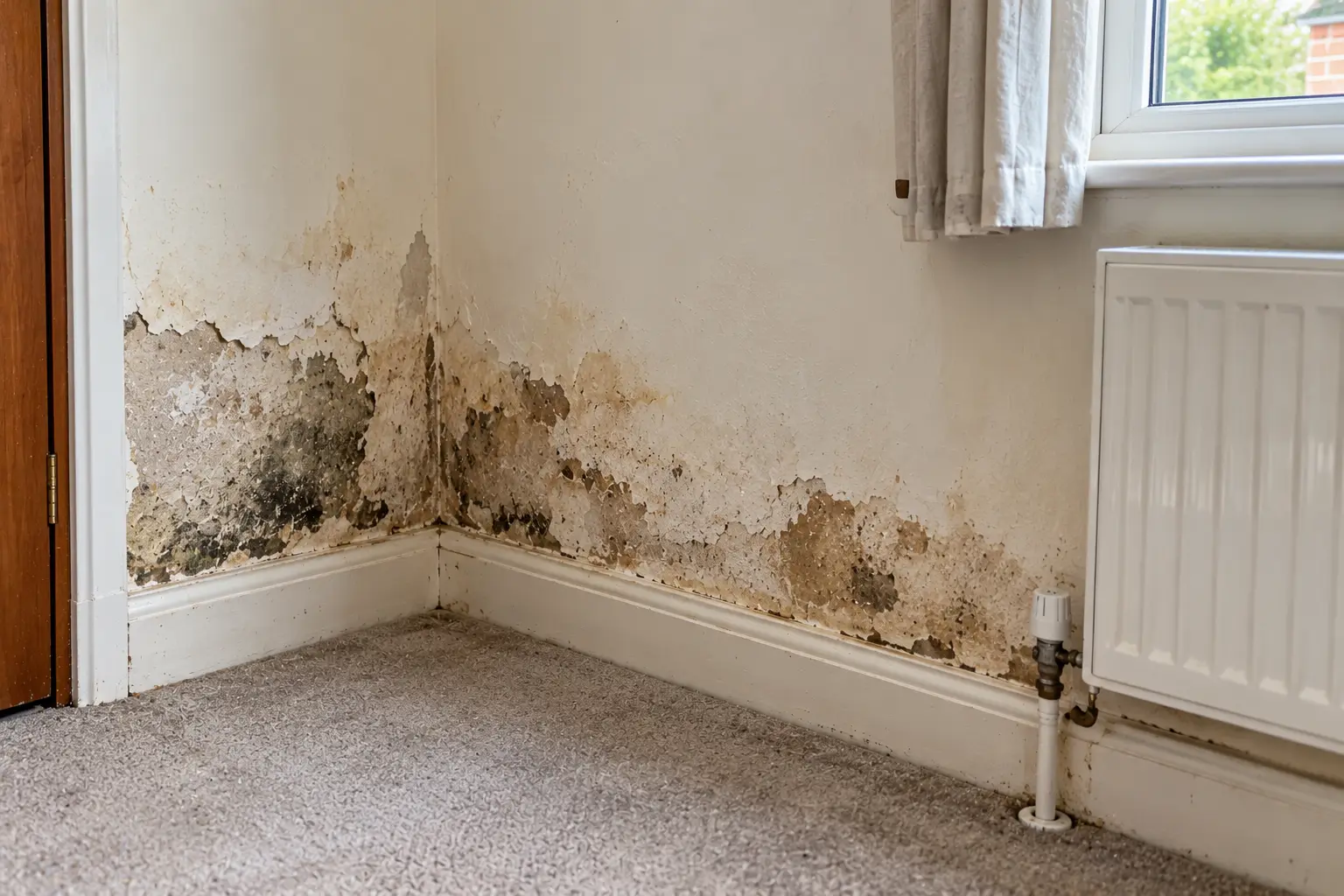
Plaster is meant to stay bonded to the masonry behind it. When that bond fails, the plaster is described as blown. The simplest check is the tap test: knock gently along the wall with your knuckles or the handle of a screwdriver. Sound plaster gives a dull, solid note, while blown areas sound hollow or drummy.
Other giveaways are a gentle bulge you can see when light falls across the wall, fine cracks around the edge of a patch, or plaster that crumbles to powder when a picture hook or skirting is removed. In bad cases a section may come away in one piece. Blown plaster is not always a damp problem, but it is always worth finding out why the bond has failed.
Damp and salts as a cause
When water moves through a wall it carries dissolved salts. As it evaporates at the surface, those salts are left behind in and under the plaster. Some, known as hygroscopic salts, pull moisture from the air, so the plaster stays damp and keeps weakening even in dry weather. Others crystallise and expand, pushing the plaster away from the wall from behind.
That is why blown, salty plaster is a common companion to rising damp and long-term penetrating damp. White fluffy deposits or a crust on the surface are a strong hint. Our guide to salt on walls explains the different salts and what they suggest.
Age and old lime or gypsum failure
Not every hollow patch is damp. Plaster in older houses can simply reach the end of its life. Lime plaster on Victorian walls may have lost strength over a century or more, and the timber laths behind ceilings can let go of their plaster keys. Later gypsum patches applied over old backgrounds may never have bonded well.
Vibration, building movement, and repeated drilling for fixtures can all loosen plaster too. In these cases the wall behind is usually dry, the plaster is not salty, and the damage is not concentrated low down. Repairs are a plastering matter rather than a damp proofing one.
Bubbling paint versus blown plaster
Paint can blister and bubble without the plaster underneath failing. Moisture trapped behind a vinyl or non-breathable paint, decorating over damp or dusty surfaces, or poor adhesion between coats can all lift the finish. If you press a bubble and find firm plaster beneath, the plaster may be fine.
Where the bubbles sit low on the wall, keep coming back after redecorating and leave a white powder behind, moisture and salts are more likely. Blistering high up, under a window or near a ceiling can point to water getting in from outside. Our guide to wet patches on walls can help you read the position.
Why salt-contaminated plaster is removed after a DPC
When rising damp is treated, a new damp proof course stops more water climbing the wall. It does not remove the salts already in the plaster. Left in place, that plaster would keep attracting moisture from the air and the damp patches would appear to return.
For that reason affected plaster is normally hacked off and replaced with a salt-resistant system as part of the treatment. Our page on damp proof course installation explains how the injection itself works, and our guide to replastering after damp proofing covers what happens to the walls afterwards.
When to call a specialist
Patching a blown area with filler can look tidy for a while, but if moisture and salts are the cause the problem tends to come back around the repair. It is worth getting advice when blown plaster sits low on a ground-floor wall, when it comes with a tide mark or salts, when a patch keeps growing, or when it appears on an outside wall after wet weather.
A specialist will take moisture readings, check outside ground levels, gutters and pointing, and work out whether the cause is damp or age. Call Seth on 07803 253337 or freephone 0800 593 0300 to talk through what you have found.
Questions about this topic
Is blown plaster always caused by damp?
No. Age, building movement and poor bonding can all cause it. Damp is more likely when it sits low down with salts or staining.
Can blown plaster be patched?
Small, dry areas often can. If salts or moisture are the cause, patching tends to fail until the source is dealt with.
Why does plaster bubble low on the wall?
Moisture and salts from the ground often collect low down, which is why rising damp is checked when bubbling starts above the skirting.
Do I need a new DPC if my plaster is blown?
Not necessarily. Bridging and other causes are ruled out first. A new damp proof course is only needed if the existing one has failed.
How long after damp treatment can I replaster?
It depends on the system used. Our guide to replastering after damp proofing explains the timing.
Related guides
- Salt on walls
What white powder or fluffy deposits mean, efflorescence versus hygroscopic salts, and why salty plaster has to go.
- Replastering after damp proofing
What happens after a new damp proof course: stripping plaster, salt-resistant systems, drying out and decorating.
- Bridged damp proof course
How patios, flower beds, render and cavity debris let moisture bypass a DPC, and why the bridge is fixed first.