
Written by Seth Long, Damp Pro and Co · Last updated: 7 October 2026
Start with the cause, not an injection
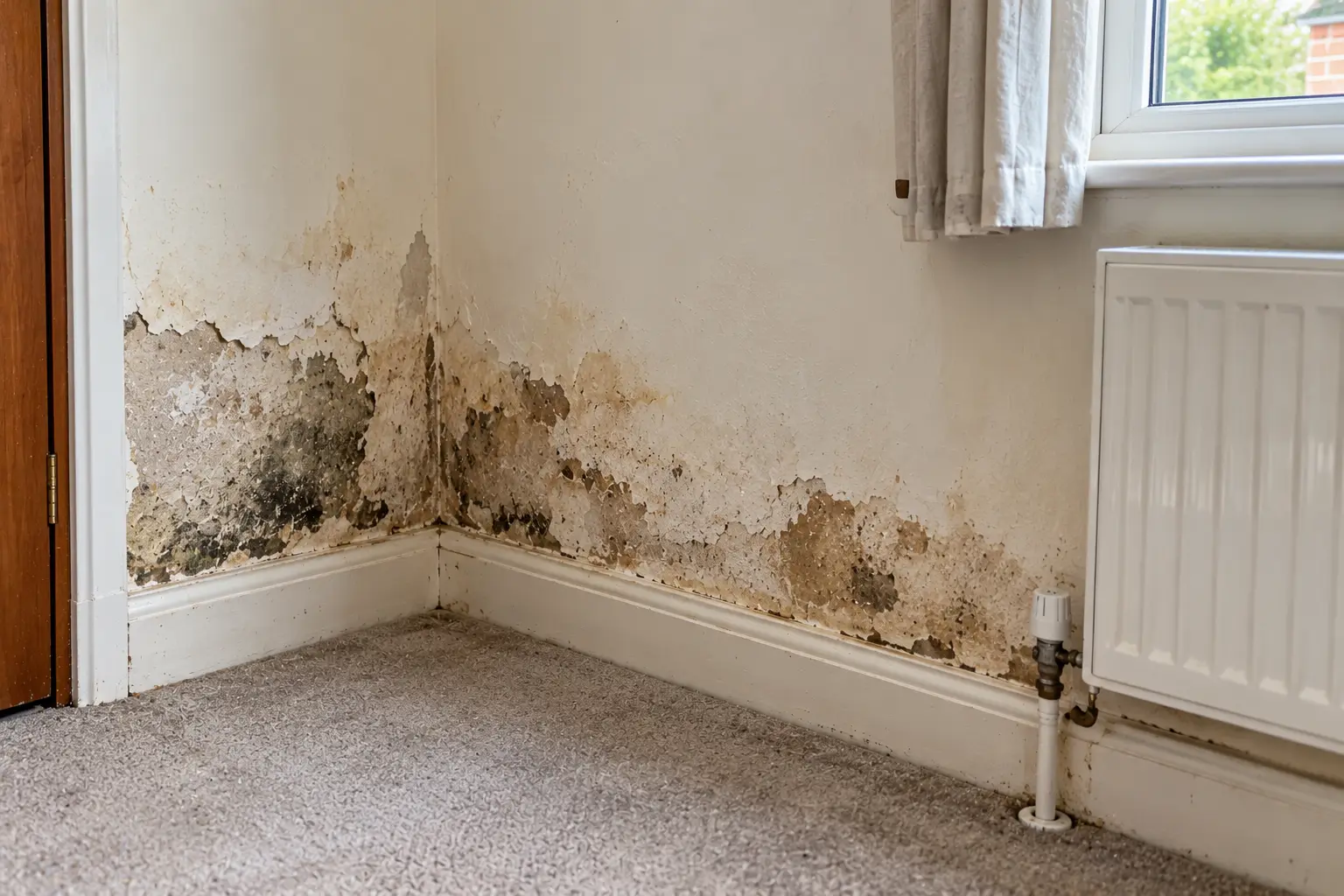
A damp patch does not automatically mean you need an injected damp proof course. Rising damp involves moisture moving up through masonry, while penetrating damp comes through defects in the building; condensation forms when moist air meets a cold surface.
These problems need different responses. Paying for DPC injection will not resolve condensation or repair a leaking gutter, so identifying the moisture source is the first step in understanding the work involved.
Damp Pro and Co offers a free, no-obligation damp survey. Before agreeing to treatment, ask for a written recommendation explaining the findings, the proposed remedy and any associated repairs. That gives you a defined scope to consider.
- Which evidence supports the diagnosis?
- Which walls need treatment, and why?
- What preparation, repairs and finishing are included?
Wall length and thickness affect DPC injection work
DPC injection cost depends partly on the total length of wall requiring treatment, not simply the floor area of your home. Several affected internal walls can create a different scope from one short section of external wall.
Wall thickness also matters because it affects drilling depth and the amount of material needed. Masonry construction, changes in level and access to the treatment line can influence the practical work.
The recommendation should identify the proposed treatment line and explain how it relates to existing floors and any existing damp proof course. Read about damp proof course treatment before comparing proposals, so you can check that they describe the same work.
Plaster removal and reinstatement can change the scope
Rising damp treatment cost can include more than work to the masonry. Plaster affected by salts may need removal and replacement, because some salts attract moisture from the air even after the original moisture source has been addressed.
How much plaster needs removing?
The affected area and condition of the plaster matter. Ask the recommendation to define removal heights and wall areas, rather than assuming every wall needs stripping or that only the visible stain needs attention.
What goes back on the wall?
Where needed, a suitable salt-resistant replastering specification should form part of the plan. Check whether skirting removal, reinstatement and final decoration are included or left for you to arrange. Our guide to replastering after damp proofing explains why the finish matters alongside the DPC.
Access and furniture affect preparation
Walls need to be accessible for inspection and treatment. Large cupboards, fitted furniture, kitchen units or radiators can make reaching the affected masonry more involved than working along a clear wall.
Discuss what can be moved safely before work starts and who is responsible for doing it. Do not assume that removing fitted units or disconnecting services forms part of a damp treatment proposal.
A clear preparation plan should cover furniture, floor protection and routes for removing stripped plaster. These details help you compare the complete job rather than just the injection stage.
Bridging and external defects may need attention
An existing DPC can be bridged by high external ground levels, render or other materials that allow moisture to pass around it. Where bridging is the cause, another injected course alone may leave the underlying problem unresolved.
Penetrating damp may instead involve defective pointing, cracked render, gutters or other external details. The necessary repair depends on where water enters and how it travels through the building.
Ask which defects need correction, whether they must be addressed before treatment and who will carry out those repairs. Associated building work should be distinguished from DPC work so that responsibilities and the overall scope are clear.
Condensation needs a different plan
If the problem is actually condensation, budgeting for rising damp treatment starts in the wrong place. Mould in cold corners, moisture on windows and patches behind furniture can point towards condensation, although symptoms alone do not establish the cause.
Condensation control may involve changes to heating, moisture management and ventilation. Damp Pro and Co provides condensation control and mould treatment, and can recommend ventilation improvements.
Tell the surveyor when the problem appears, which rooms are affected and whether it changes with the weather or household routines. That information helps put visible marks into context.
Check the recommendation and guarantee together
Compare recommendations on diagnosis, wall lengths, plaster areas, preparation and associated repairs. A proposal covering injection alone is not equivalent to one that also includes plaster removal and salt-resistant reinstatement.
Damp Pro and Co uses a BBA approved damp proofing system and has PCA trained and Safeguard Ltd trained technicians, with over 30 years' experience. Completed damp proof course work comes with a 20-year guarantee certificate; this does not extend to other work.
Call 07803 253337 to arrange a survey.
Questions about this topic
Can you assess damp proofing cost from photos?
Photos can show the location and appearance of damage, but not reliably establish its cause, wall construction or hidden bridging. A survey should come first.
Does every damp wall need DPC injection?
No. Condensation, external defects and bridging can require different remedies. Injection should follow a diagnosis that supports the need for a damp proof course.
Is replastering always necessary?
Not automatically. The condition of the plaster and evidence of salt contamination determine the recommendation. Ask for the proposed removal area and replacement specification.
What does the 20-year guarantee cover?
Damp Pro and Co provides a 20-year guarantee certificate on completed DPC work only. It is not a guarantee covering condensation control, mould treatment or other work.
Does booking a survey commit me to treatment?
No. The damp survey is free and carries no obligation. Use the findings and a written recommendation to understand what is needed before agreeing to work.
Related guides
- Replastering after damp proofing
What happens after a new damp proof course: stripping plaster, salt-resistant systems, drying out and decorating.
- Mould removal cost
The factors behind the cost of mould removal, and why treating the cause matters more than cleaning the stain.
- Signs of rising damp
Tide marks, salty plaster, lifting skirting and the outside checks that show whether damp is rising from the ground.