
Damp guides and advice
Straightforward explanations from a West London damp proofing team, so you can understand what is happening to your walls before anyone quotes for work.
- Checkatrade 9.82 (389 reviews)
- Google 4.9
- 20-year DPC guarantee
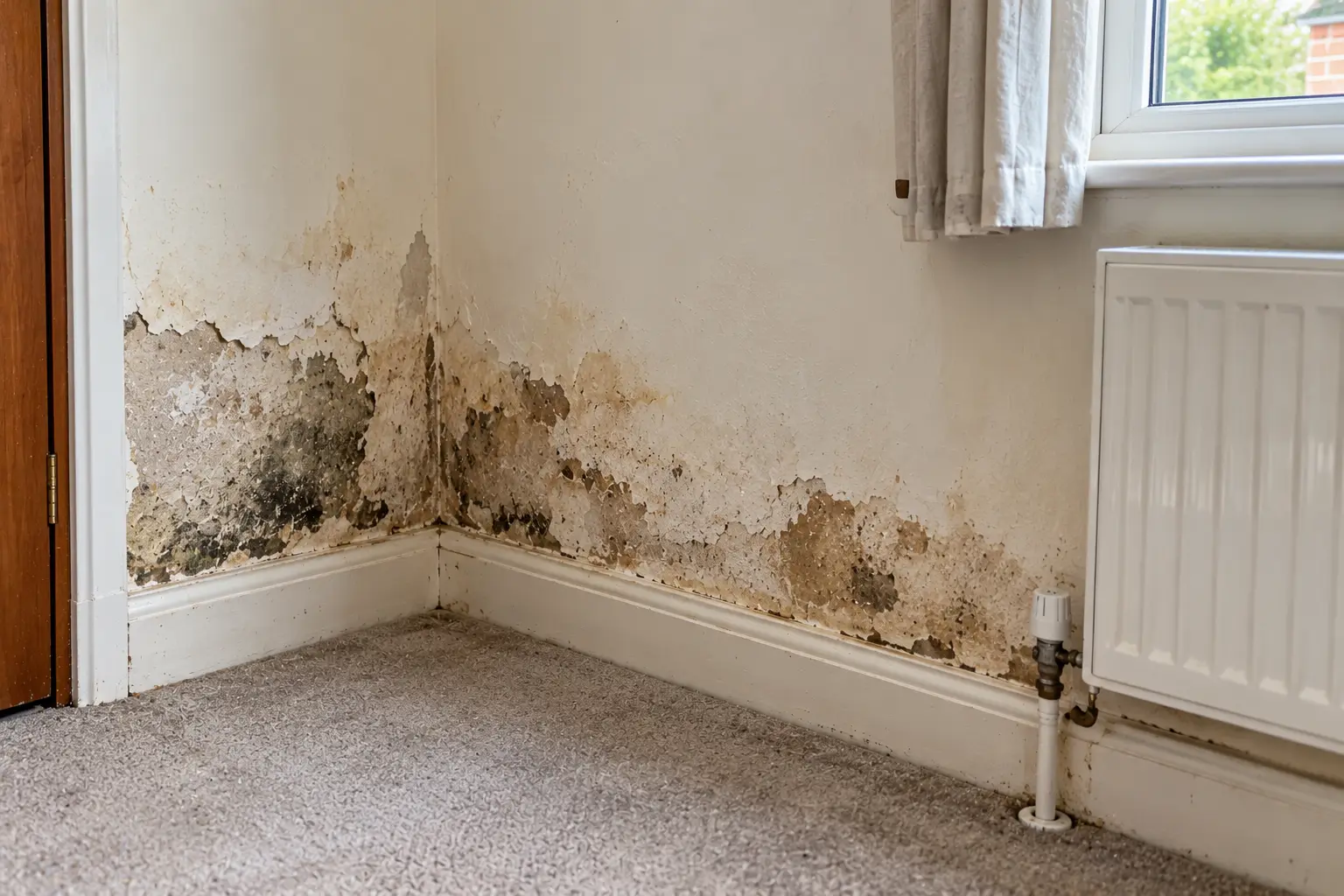
Most damp problems fall into three groups: moisture rising from the ground, rain getting in from outside, and condensation from everyday living. These guides explain how to recognise each one, what you can safely do yourself, and when it is worth booking a free damp survey.
Rising damp
Signs of rising damp
Tide marks, salty plaster, lifting skirting and the outside checks that show whether damp is rising from the ground.
Rising damp vs condensation
How to tell the two most common causes of damp walls apart, and why the treatment is completely different.
Types of damp
Rising, penetrating and condensation damp side by side: causes, where each appears and how each is treated.
Salt on walls
What white powder or fluffy deposits mean, efflorescence versus hygroscopic salts, and why salty plaster has to go.
Replastering after damp proofing
What happens after a new damp proof course: stripping plaster, salt-resistant systems, drying out and decorating.
Managing damp in your London home
London and Middlesex housing types and a season-by-season checklist for keeping damp out.
Bridged damp proof course
How patios, flower beds, render and cavity debris let moisture bypass a DPC, and why the bridge is fixed first.
Blown plaster
Hollow, bulging or bubbling plaster: when salts and damp are behind it, and when it is simply age.
Penetrating damp
Wet patches on walls
Reading a wet patch by height, shape and timing to tell rising damp, rain getting in and leaks apart.
Cracked render and damp
How cracked or hollow render lets rain in, why hard render traps moisture and how repairs are decided.
Spalling bricks
Why brick faces flake away: saturation, frost, hard cement pointing and leaking gutters.
Cavity wall insulation and damp
How a filled cavity can carry rain across on exposed walls, and how other causes are ruled out.
Condensation and mould
How to stop condensation
Practical ways to stop condensation on windows and walls, from drying washing to extractor fans and ventilation.
Black mould on walls
How to clean black mould safely, why it keeps coming back and how to find the moisture behind it.
Mould in the bedroom
Why bedrooms suffer most: overnight moisture, wardrobes on cold walls and the habits that make a difference.
Costs
Damp proofing cost
What decides the price of DPC injection and rising damp treatment, and why a survey comes before any figure.
Mould removal cost
The factors behind the cost of mould removal, and why treating the cause matters more than cleaning the stain.
Damp guide questions
How do I know which type of damp I have?
Rising damp stays low on the wall with a tide mark and salts, penetrating damp follows the weather and can appear at any height, and condensation shows as streaming windows and mould in cold corners. Our types of damp guide explains each one.
Can I fix damp myself?
Condensation and small patches of mould can often be improved with better ventilation and heating habits. Rising damp and penetrating damp usually need the cause repaired, so a survey is worth it before spending money.
Who writes these guides?
The guides are written for Damp Pro and Co under Seth Long, drawing on over 30 years' experience of damp proofing in West London and South Bucks.
Is a damp survey really free?
Yes. Our free damp survey includes moisture readings and a written recommendation, with no obligation to go ahead.
Do the guides cover costs?
Yes. The costs guides explain what affects the price of damp proofing and mould removal, but every home is different, so we only quote after a survey.
Worried about damp? Book your free survey today.
Open 24 hours. Over 30 years' experience. 20-year guarantee on completed DPC work.