
Written by Seth Long, Damp Pro and Co · Last updated: 7 October 2026
How cavity walls keep water out
Most houses built from around the 1930s onwards have cavity walls: an outer leaf of brick or block, a gap, then an inner leaf. The outer leaf takes the weather. In heavy, wind-driven rain some water soaks right through it, but the gap stops that water reaching the inner leaf. It runs down the back of the outer brickwork and out through weep holes or the base of the wall.
Metal ties span the gap to hold the two leaves together, and they are designed with a drip so water cannot track along them. The whole system relies on the cavity staying clear, so nothing provides a bridge from the wet outer leaf to the dry inner one.
How insulation can bridge the cavity
When a cavity is filled with insulation after the house is built, the gap is no longer empty. In most walls that causes no problem. But if the outer leaf lets in a lot of water, or the insulation was installed unevenly, has slumped, or has become wet, it can carry moisture across to the inner leaf.
Other things can bridge the gap too. Mortar droppings and debris left at the bottom during construction, or packed against wall ties, are a long-standing cause of damp in cavity walls, with or without insulation. That is why diagnosis looks at the whole wall rather than assuming the insulation is to blame.
Exposed elevations and driving rain
Some walls are far more exposed than others. A gable end facing open ground, a house on a hillside, or an upper storey above neighbouring roofs can take wind-driven rain for hours at a time. Those elevations push more water through the outer leaf, which raises the chance of it crossing a filled cavity.
Damp linked to cavity insulation tends to show on the most exposed walls first, often the one facing the prevailing weather, while sheltered walls of the same house stay dry. That pattern is one of the clues used in diagnosis.
Outer-leaf defects that make it worse
The less water that reaches the cavity, the less there is to cross it. Worn or cracked pointing, cracked render, spalled bricks, leaking gutters and downpipes, and poorly sealed window and door frames all increase how much rain gets into the outer leaf.
Our guides to cracked render and spalling bricks explain how these defects let water in. Putting them right is often part of the solution, whatever is then decided about the insulation.
Signs inside
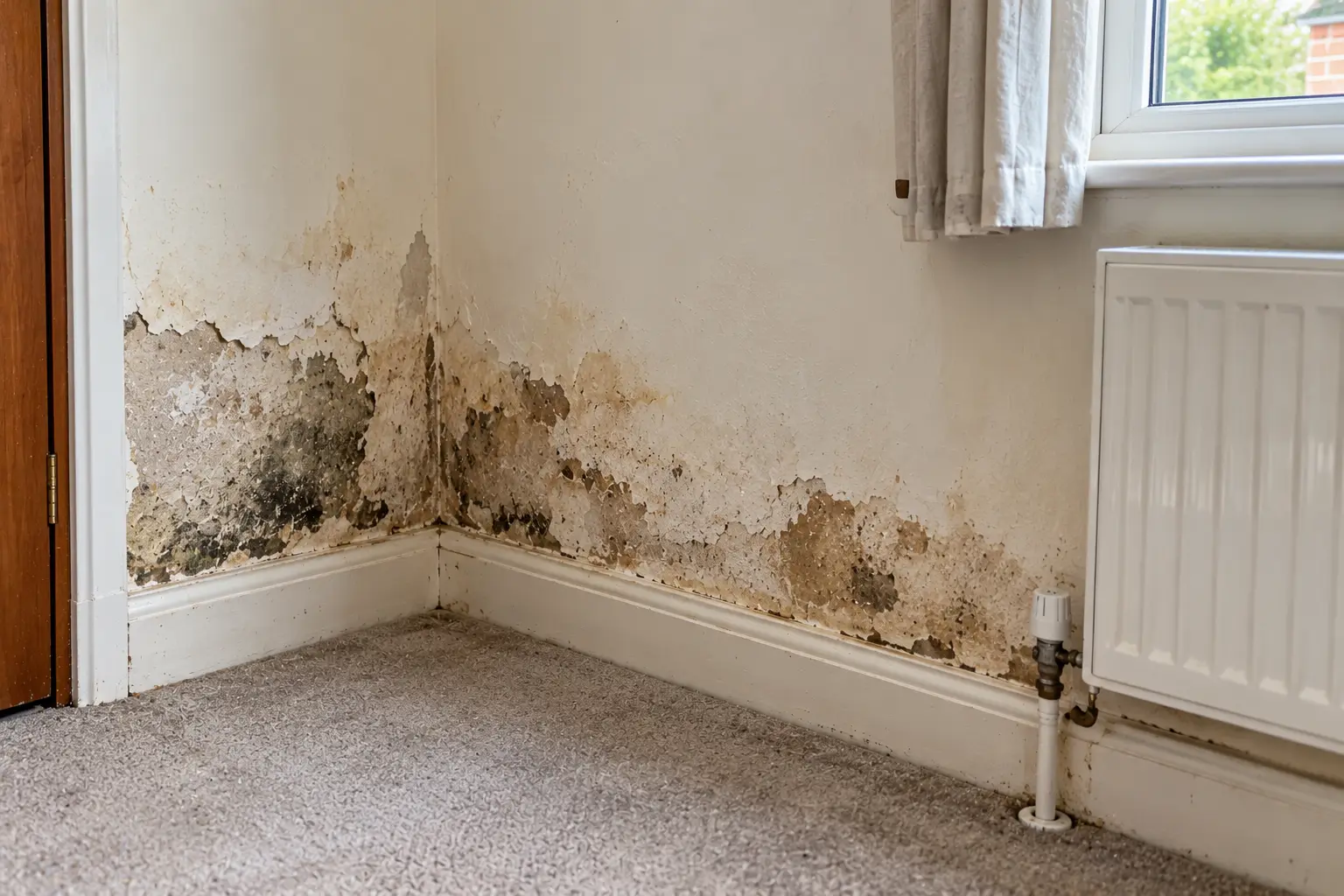
Damp from a bridged cavity usually appears as patches on the inside face of external walls that darken after periods of wind-driven rain. They may be scattered across the wall rather than in a neat band, and can show at any height, including upstairs. Cold spots, mould behind furniture on those walls, and lifting paint are also common.
Because the same symptoms can come from condensation, leaks or rising damp, the position and timing of the patches matter. Our guide to wet patches on walls explains how to read them, and the types of damp guide compares the main causes.
Diagnosis: ruling out other causes
Before anyone blames the insulation, other sources need ruling out. Low-level damp with a tide mark points towards the ground rather than the cavity. Patches that follow wet rooms or pipes may be a leak. Damp that comes and goes with indoor activity rather than the weather suggests condensation.
A specialist inspects inside and out, takes moisture readings across the affected walls and compares them with dry areas, and checks pointing, render, gutters and openings. Where the pattern and readings point to water crossing the cavity, further investigation of the cavity itself may follow. Our penetrating damp treatment page explains our approach to finding and repairing the entry point on the outside of the wall.
Next steps
If the insulation itself is found to be the problem, extracting it from a cavity is specialist work, normally carried out by firms that deal specifically with cavity insulation. The installer or any guarantee provider for the insulation may also need to be contacted.
Repairs to the outer leaf, such as repointing, render repairs, resealing or water-repellent treatments, and replastering damaged areas inside, are the kind of work covered on our penetrating damp page. Call Seth on 07803 253337 or freephone 0800 593 0300 to talk through damp on an insulated wall.
Questions about this topic
Why has damp appeared after cavity wall insulation?
On exposed walls or where the outer leaf lets in a lot of rain, insulation can carry moisture across the cavity. Other causes need ruling out first.
Which walls are most at risk?
Walls facing the prevailing weather, gable ends and upper storeys exposed to wind-driven rain.
Can damp from cavity insulation be fixed without removing it?
Sometimes. Reducing the water entering the outer leaf through repairs can help, but each wall needs assessing.
Is it rising damp or the insulation?
Rising damp stays low with a tide mark. Damp from a bridged cavity follows wind-driven rain and can appear at any height.
Who checks cavity wall insulation problems?
A damp specialist can rule out other causes. Extracting insulation is specialist work for cavity insulation firms.
Related guides
- Wet patches on walls
Reading a wet patch by height, shape and timing to tell rising damp, rain getting in and leaks apart.
- Cracked render and damp
How cracked or hollow render lets rain in, why hard render traps moisture and how repairs are decided.
- Types of damp
Rising, penetrating and condensation damp side by side: causes, where each appears and how each is treated.