
Written by Seth Long, Damp Pro and Co · Last updated: 7 October 2026
Start with the pattern, not just the patch
Note where damp appears, when it worsens and what is happening outside. A patch after wind-driven rain suggests a different investigation from moisture on bedroom windows each morning.
Photograph changes and check accessible areas without climbing onto roofs or ladders. Plumbing leaks can also produce damp patches, so not every wet wall belongs neatly to one of the three categories.
- Record whether patches follow rainfall, cold weather or everyday cooking and bathing.
- Look for damaged finishes, salts, mould and nearby water sources.
- Tell the surveyor about previous repairs and any recurring leaks.
Penetrating damp: rain finding a route indoors
Penetrating damp happens when water passes through defects in the building fabric. It can appear at any height, including upstairs walls and ceilings, and may become more noticeable after rain. The indoor stain is not always directly opposite the entry point because water can travel through construction. Outside, flaking or spalling bricks are often a sign that brickwork has stayed wet for long periods.
Gutters, pointing and render
Blocked or leaking gutters can repeatedly soak masonry below, while defective downpipes concentrate water in one area. Open mortar joints and cracked render provide routes through exposed walls. Look from ground level for overflow marks, gaps and cracks; simply covering the inside stain leaves the source untouched.
Chimneys and window sills
Damp around a chimney breast can relate to defective flashings, pointing or the chimney top, although salts can complicate the picture. Around windows, cracked sills, failed joints or blocked drip details may let rain track into the wall. The survey needs to consider the outside details, not just the internal reveal.
Bridged cavities and flat roofs
Mortar debris or other material spanning a cavity can carry moisture from the outer leaf towards the inner wall. Confirmation may need a closer cavity inspection rather than guesswork. Flat roof coverings, upstands, outlets and junctions can also leak, producing ceiling or upper-wall patches some distance from the defect.
Diagnosing and treating penetrating damp
Diagnosis brings together the timing of symptoms, external defects and the indoor moisture pattern. A moisture meter helps map areas for investigation, but a high reading alone does not identify the cause. Suspected concealed defects may need further inspection.
Treatment starts by correcting the water entry route: clearing or repairing rainwater goods, repairing suitable mortar joints, addressing render cracks or arranging roof repairs as needed. Cavity bridging needs an appropriate remedy once confirmed; an internal coating is not a substitute for stopping ingress.
Allow the wall to dry before deciding what internal finishes need replacing. Drying time varies with wall thickness, materials and how long the leak continued. Our penetrating damp treatment page explains this service.
Rising damp: moisture moving up from the ground
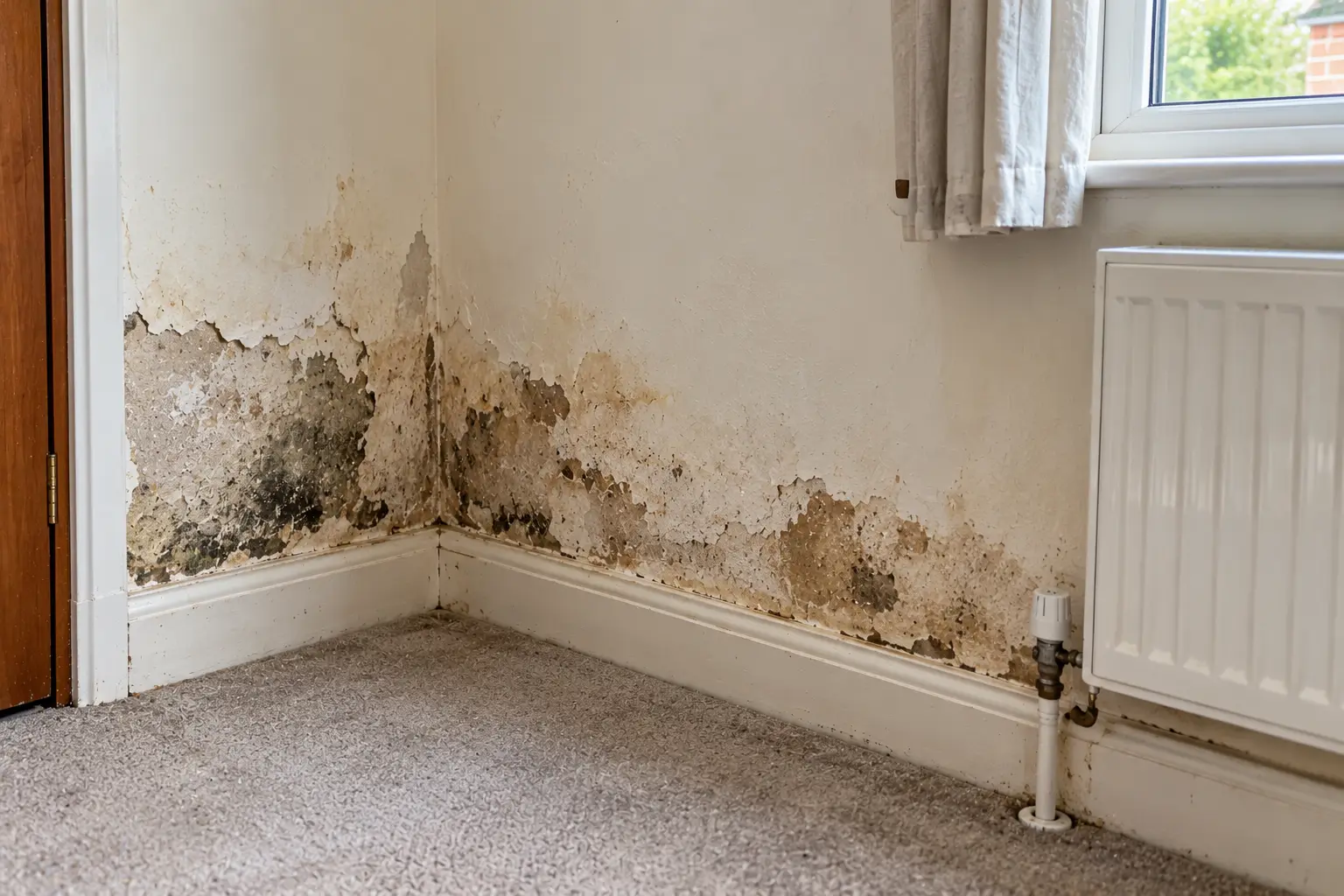
Rising damp is ground moisture moving upwards through porous masonry by capillary action. It usually affects the lower parts of ground-floor walls, where damaged plaster, peeling decoration or salts may appear. None of these signs proves rising damp on its own.
Diagnosis should consider the existing damp proof course, external ground levels, floor junctions and possible bridging. Moisture patterns and, where appropriate, material testing help distinguish ground moisture from rain penetration, leaks or condensation.
Treatment depends on the cause and may involve removing bridging or installing a damp proof course where justified. Salt-affected plaster may also need attention. Damp Pro and Co uses a BBA approved damp proofing system; see rising damp treatment.
Condensation: indoor moisture meeting cold surfaces
Condensation forms when moisture-laden air meets a surface cold enough for water to collect. Cooking, bathing and drying laundry indoors add moisture. Windows, external corners, bedroom walls and areas behind furniture are common locations, sometimes with mould.
Assessment looks at humidity, surface temperatures, heating patterns and how moisture escapes. Water droplets and mould offer clues, but leaks still need ruling out where the pattern is unusual.
Control usually combines reducing moisture at source, using available extraction, maintaining suitable background warmth and improving airflow. We can recommend ventilation improvements. For the detailed distinction between two commonly confused causes, read rising damp versus condensation.
When more than one type is present
A rain-soaked wall can become colder, making condensation more likely on its inside surface. A ground-floor room may also have low-level ground moisture alongside condensation behind furniture.
Each source needs separate attention. Repairing a gutter will not resolve indoor humidity, while improving airflow will not stop rain entering through defective pointing.
When to arrange a damp survey
Arrange an assessment if patches return, spread or have no clear source. Avoid repeatedly repainting before the cause is understood.
Damp Pro and Co offers homeowners a free, no-obligation damp survey across West London and South Bucks from Ruislip. Call 07803 253337 or freephone 0800 593 0300.
Questions about this topic
Can penetrating damp appear upstairs?
Yes. Roof defects, chimney junctions and exposed masonry can admit rain above ground-floor level.
Does mould prove condensation?
No. Mould indicates damp conditions, but the underlying moisture source still needs checking.
Will a damp proof course stop penetrating damp?
Not generally. Rain entering through a building defect needs that entry route addressed.
Can I diagnose damp with a handheld meter?
Not reliably from readings alone. Salts and material differences can affect results.
Which work carries the guarantee?
Completed damp proof course (DPC) work carries a 20-year guarantee certificate. This does not cover other work.
Related guides
- Rising damp vs condensation
How to tell the two most common causes of damp walls apart, and why the treatment is completely different.
- Signs of rising damp
Tide marks, salty plaster, lifting skirting and the outside checks that show whether damp is rising from the ground.
- Managing damp in your London home
London and Middlesex housing types and a season-by-season checklist for keeping damp out.