
Written by Seth Long, Damp Pro and Co · Last updated: 7 October 2026
What spalling looks like
Spalling is the loss of the outer face of a brick. It can start as a light dusting of grit at the foot of the wall, then progress to flakes and thin scales coming away, and finally to bricks with deep pockets where the hard outer skin has gone altogether. Exposed, softer brick inside then weathers faster.
It often affects bricks in particular places rather than a whole elevation: under a leaking gutter, beside a downpipe, below a window sill, at the base of a wall or near the top of a chimney or parapet. That pattern is a useful clue, because it points to where water is concentrated.
Why saturated bricks spall
Bricks are porous. In a normal wall they absorb some rain and then dry out. When a section stays wet for long periods, the pores fill with water. In cold weather that water freezes and expands, pushing outward from inside the brick. Repeated freezing and thawing over several winters breaks the surface away layer by layer.
Salts carried in the water can add to the damage, crystallising just behind the face as the wall dries and forcing it off. Softer, older bricks are more vulnerable, but even sound bricks will spall if a defect keeps them soaked.
Hard cement pointing on soft bricks
Mortar joints are meant to be the sacrificial part of a wall. Traditional lime mortar is softer and more porous than the brick, so moisture leaves through the joints and they wear first, leaving the bricks intact. When an older wall is repointed with hard cement mortar, that relationship is reversed.
Water is then forced to escape through the face of the brick instead, and frost damage concentrates there. Walls repointed in this way sometimes show sound, proud mortar lines with crumbling bricks between them. Repointing in a mortar that suits the brick helps restore the balance.
Water sources: gutters, downpipes, copings and sills
Most spalling has a water source you can find. Blocked or overflowing gutters pour water down the same few courses of brick. Cracked or leaking downpipe joints soak a narrow strip. Missing or damaged copings let rain straight into the top of garden and parapet walls, and sills without a drip groove channel water back onto the wall below.
Splash-back from hard paving at the base of a wall, and ground levels banked up against the brickwork, keep the lowest courses wet too. Fixing these sources is usually the first step, because no surface treatment can keep up with a steady supply of water.
The link to damp inside
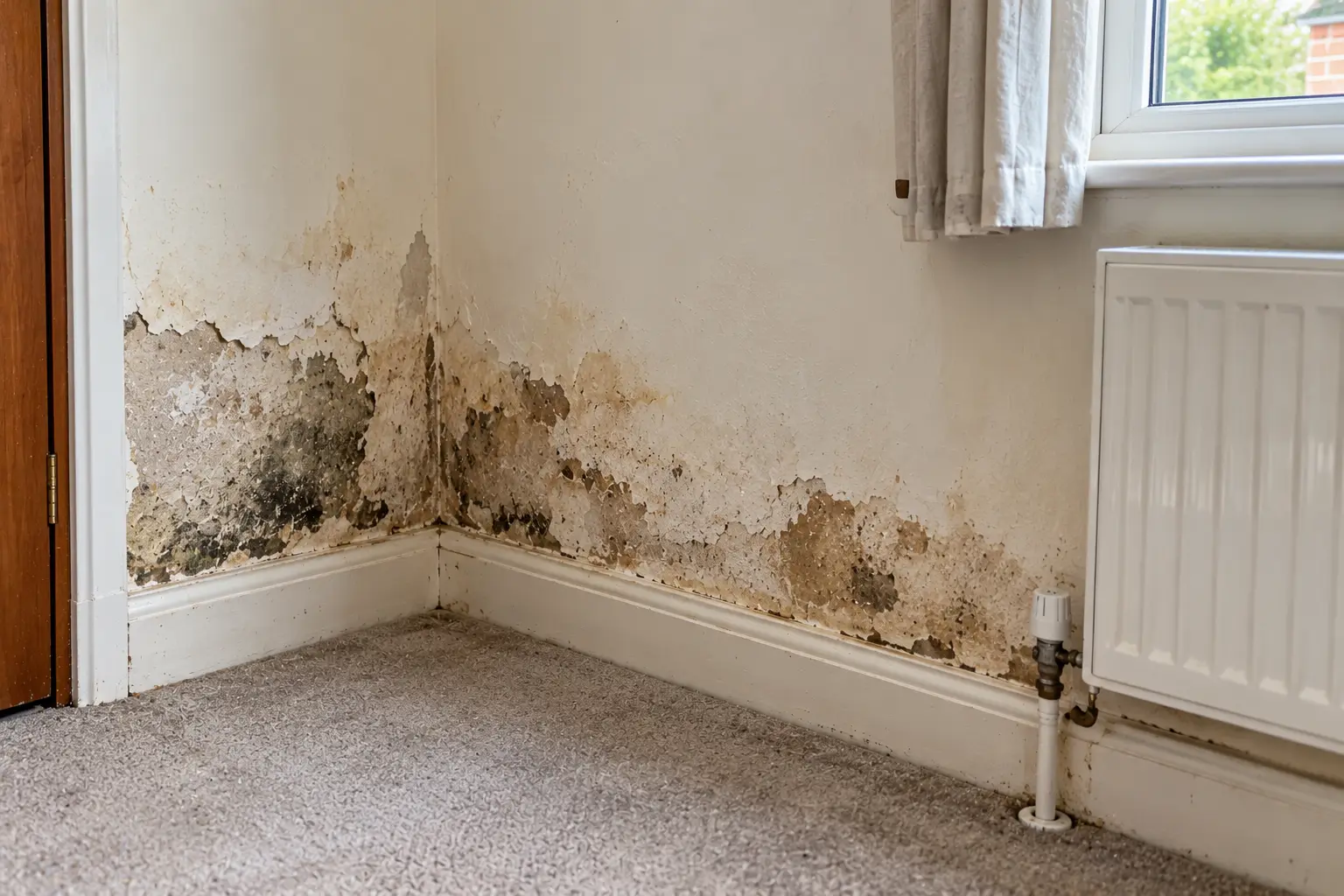
Brickwork wet enough to spall is often wet enough to pass moisture through to the inside, particularly in solid walls with no cavity. Damp patches indoors that line up with damaged brickwork outside, and that worsen after rain, point to penetrating damp. Our types of damp guide explains how this differs from moisture rising from the ground or condensation.
Salts brought through by that moisture can also show on the inside face of the wall as white deposits; our guide to salt on walls explains what they mean.
Repointing and water-repellent treatment
On our penetrating damp treatment work, we inspect inside and out, take moisture readings and check gutters, pointing, render and openings. Repairs can include repointing, render repairs, resealing, and water-repellent treatments to masonry as appropriate, followed by replastering inside once the wall is protected.
A water-repellent treatment is a clear product applied to the outside face of brickwork to reduce how much rain it absorbs while still allowing it to dry. It is only suitable once defects such as leaking gutters and failed joints have been put right, and on brickwork in a fit state to receive it.
Replacing badly damaged bricks
Where spalling has gone deep, individual bricks may need cutting out and replacing, or turning so a sound face shows. This is general building work, and matching the size, colour and hardness of the original bricks matters so the repair does not create new weak points.
Whatever the repair, the cause needs dealing with first or new bricks will simply follow the old ones. Call Seth on 07803 253337 or freephone 0800 593 0300 to talk about damp linked to damaged brickwork.
Questions about this topic
Is spalling brickwork dangerous?
Light surface spalling is mainly a weathering problem, but it gets worse each winter. Deep or widespread damage should be looked at by a builder.
Can spalling bricks cause damp inside?
Brickwork wet enough to spall can pass moisture inside, especially in solid walls. That is a form of penetrating damp.
Should spalled bricks be replaced?
Badly damaged bricks often are, but only after the water source has been fixed, or the new bricks will suffer too.
Does repointing stop spalling?
It can help when hard cement pointing is forcing water out through the bricks. Using a mortar suited to the brick matters.
What is a water-repellent treatment?
A clear treatment applied to masonry to reduce rain absorption while letting the wall dry. It goes on after repairs, not instead of them.
Related guides
- Cracked render and damp
How cracked or hollow render lets rain in, why hard render traps moisture and how repairs are decided.
- Types of damp
Rising, penetrating and condensation damp side by side: causes, where each appears and how each is treated.
- Salt on walls
What white powder or fluffy deposits mean, efflorescence versus hygroscopic salts, and why salty plaster has to go.