
Written by Seth Long, Damp Pro and Co · Last updated: 7 October 2026
What white or fluffy deposits tell you
Salt deposits on walls often look like white dust, fine crystals or a fluffy crust. They form when water dissolves salts within masonry, mortar or the ground, then carries them through porous materials. As that water evaporates, salts are left behind.
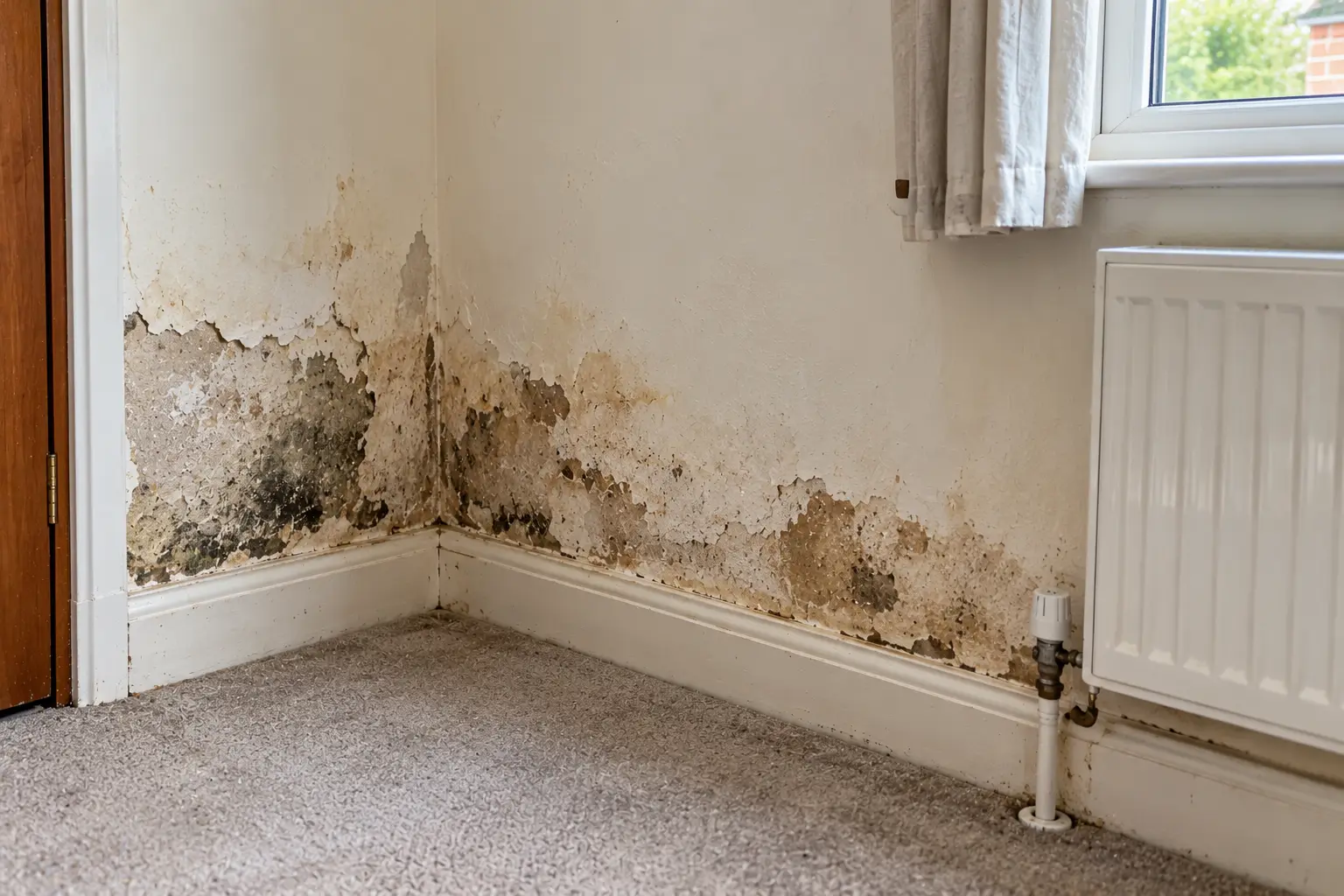
A deposit shows that moisture has moved through the material, but it does not identify the source or prove the wall is still getting wetter. Rising damp, penetrating rain and moisture left from an earlier leak can all leave salts. Appearance alone cannot tell you which treatment is needed.
- Note whether deposits return after gentle dry brushing.
- Photograph their position and any surrounding staining.
- Record whether changes follow rain, cold weather or humid conditions.
Efflorescence versus hygroscopic salts
Efflorescence describes the formation of visible salt crystals on a surface; it is not the name of one particular salt. Hygroscopic describes a different property: the ability to take up moisture from the surrounding air. The two terms are therefore not exact opposites.
Efflorescence: crystals left by evaporation
Many efflorescent deposits are relatively dry and powdery once the carrying water has evaporated. Sulphate salts are common examples in building materials. Light surface deposits may be mainly cosmetic, although repeated crystallisation within porous materials can contribute to surface breakdown.
Hygroscopic salts: moisture attracted from the air
Nitrates and chlorides can be associated with ground moisture carried up masonry. Depending on their chemical form and the indoor humidity, these salts can absorb water from the air. Contaminated plaster may feel damp without showing an obvious white crust, so the absence of powder does not rule out salts.
Does salt on walls mean rising damp?
Not necessarily. Low-level salt contamination, damaged skirting and a tide mark can support a rising damp diagnosis, but they need to be considered alongside external ground levels, wall construction and other possible moisture sources. Our guide to the signs of rising damp explains what to look for.
An electrical moisture meter reading alone is not enough: salts can increase conductivity and produce high readings. A survey should consider the pattern and history of dampness, with further testing where needed. Identifying a nitrate or chloride still does not establish the whole cause without that context.
Why plaster can stay damp after a new DPC
A damp proof course, or DPC, is intended to interrupt moisture rising through masonry. It does not remove water already in a wall, and it does not extract salts deposited in the plaster. Drying takes time and varies with wall thickness, finishes and conditions indoors.
Even after the rising moisture supply has been controlled, hygroscopic salts can continue drawing water from humid room air. That can leave persistent damp-looking patches or spoil new decoration. It does not automatically mean the new DPC has failed, although continuing moisture entry must still be checked. Salts crystallising behind the surface are also a common reason for bubbling or blown plaster.
Why salt-resistant replastering is part of treatment
Where plaster is significantly contaminated, addressing the water source alone may not give a sound decorative finish. Removing affected plaster and using a suitable salt-resistant replastering system is often part of rising damp treatment. Not every patch of white powder requires wholesale plaster removal.
The replastering specification should suit the wall construction and extent of contamination, particularly in older buildings where moisture movement needs careful consideration. Ordinary finishing plaster applied directly over contaminated masonry may develop staining or deterioration again.
Salt-resistant plaster helps limit salt migration into the new finish; it is not a substitute for stopping moisture entry. See our guide to replastering after damp proofing before arranging decoration.
What you can safely do before a survey
Photograph the deposit before disturbing it. For a small area on a sound surface, gently dry-brush loose crystals while wearing gloves and suitable dust protection, keeping dust contained. Avoid aggressive scraping of fragile plaster.
Do not wash salts back into the wall or simply cover them with paint. Avoid acid cleaners on internal plaster, and do not assume a mould cleaner will remove salt contamination. Maintain steady background warmth and sensible ventilation, but recognise that these measures cannot repair a leak or remove embedded salts.
When to arrange a damp survey
Arrange an assessment if deposits repeatedly return, plaster crumbles or damp patches persist after repairs. Damp Pro and Co offers a free, no-obligation damp survey for homeowners across West London and South Bucks from Ruislip.
Call 07803 253337 or freephone 0800 593 0300 to discuss the signs you have noticed.
Questions about this topic
Is white powder on walls always salt?
No. Deteriorating paint, plaster dust and some mould growth can look similar. Check the surrounding surface and moisture pattern rather than relying on colour alone.
Can I paint over efflorescence?
Not while deposits are forming or the cause remains unresolved. Paint may blister or peel. Deal with the moisture source and assess the surface before decorating.
Will a dehumidifier remove hygroscopic salts?
No. Lower humidity may reduce moisture uptake, but a dehumidifier cannot extract salts embedded in plaster. Contaminated material may still need appropriate replacement.
How long will salts keep coming back?
There is no fixed timescale. Recurrence depends on continuing moisture movement, the amount and type of salt, indoor humidity and whether contaminated finishes remain.
Does salt-resistant replastering carry a DPC guarantee?
Damp Pro and Co provides a 20-year guarantee certificate on completed damp proof course work only. That guarantee does not extend to replastering or other work.
Related guides
- Signs of rising damp
Tide marks, salty plaster, lifting skirting and the outside checks that show whether damp is rising from the ground.
- Replastering after damp proofing
What happens after a new damp proof course: stripping plaster, salt-resistant systems, drying out and decorating.
- Types of damp
Rising, penetrating and condensation damp side by side: causes, where each appears and how each is treated.