
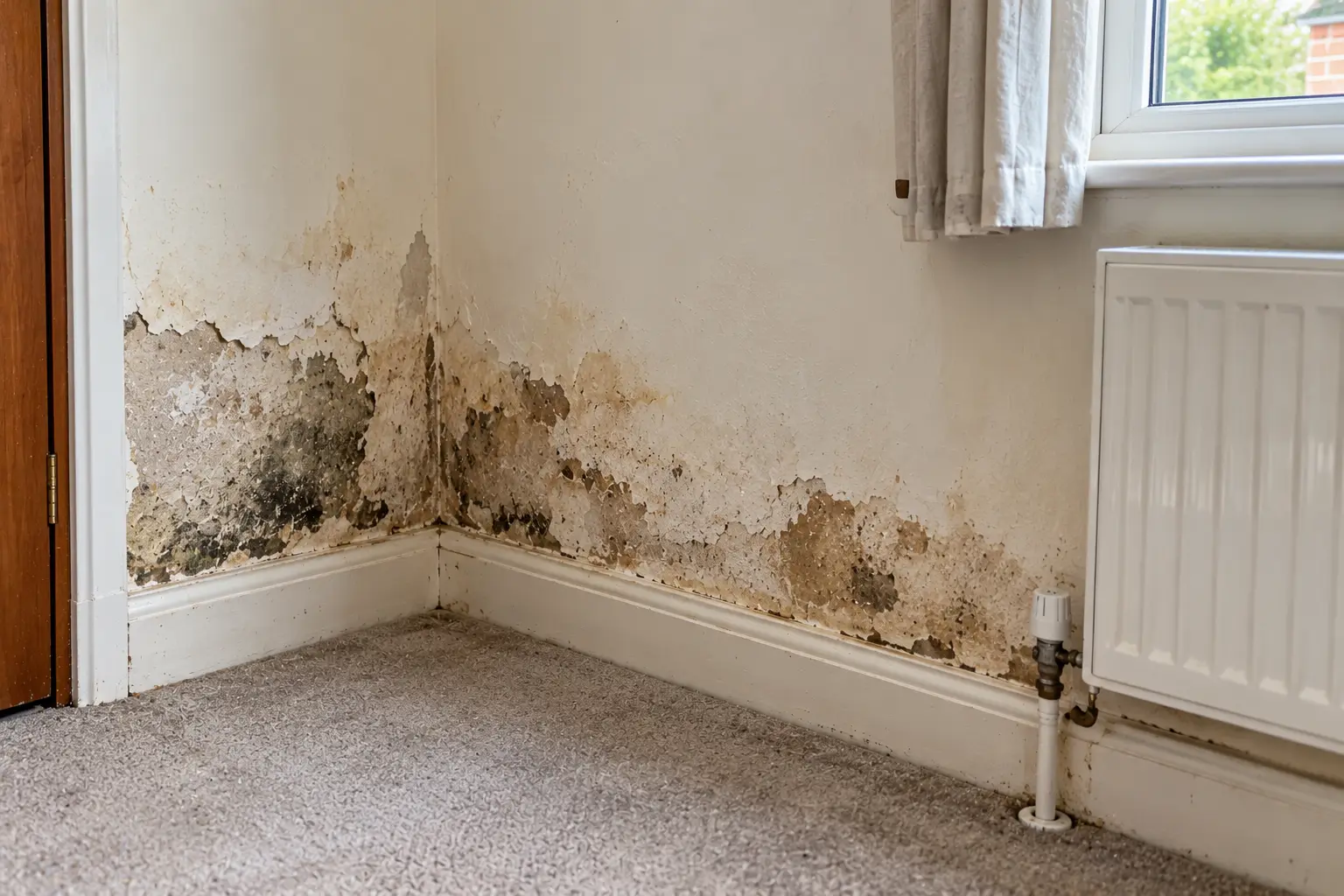
Condensation is the most common form of damp in UK homes. It happens when warm, moist air meets a cold surface, and it causes streaming windows, damp corners and black mould. We help you control it for good.
Why condensation happens
Everyday life puts a lot of moisture into the air. Cooking, showers, drying washing indoors and even breathing add several litres of water vapour a day in a typical family home.
When that moist air reaches a cold surface – a window, an external wall, a corner behind a wardrobe – it turns back into water. Modern double glazing and blocked vents can make it worse by trapping the moisture inside.
Condensation on walls
Condensation on walls is easy to miss because it rarely runs like it does on glass. Instead, a cold external wall feels slightly damp to the touch, wallpaper loosens, and grey or black spotting appears in the top corners, behind sofas and inside wardrobes. North-facing rooms and bedrooms with the door shut overnight are the usual suspects.
Unlike rising damp, there is no tide mark and no salt, and unlike penetrating damp it does not follow the weather. It is driven by how much moisture the household produces and how cold the wall surface is. Our guide on how to stop condensation covers the everyday fixes, and mould in the bedroom looks at the room where it causes most trouble.
Signs of condensation
Condensation tends to be worst in winter and in rooms with the most moisture.
- Water running down windows in the morning
- Black mould spots in corners, behind furniture and around window frames
- Damp, musty smelling clothes in wardrobes
- Peeling paint in bathrooms and kitchens
- Damp patches on cold external walls with no clear tide mark
How we control condensation
After a survey we recommend the right mix of measures for your home.
Ventilation
Improving extraction in kitchens and bathrooms and providing controlled whole-house ventilation where needed, so moist air is removed before it condenses.
Treating cold spots
Advice on dealing with the cold surfaces where condensation forms, so walls stay above the dew point.
Mould treatment
Safe treatment of existing mould so you start with clean, healthy surfaces.
Practical advice
Simple day-to-day habits that make a real difference, explained clearly with no jargon.
Making sure it really is condensation
Condensation is often confused with rising or penetrating damp, and sometimes a home has more than one problem. Our PCA trained technicians will tell you exactly what is going on, so you never pay for a damp proof course you do not need.
Condensation control questions
Will a dehumidifier fix condensation?
It can help, but it treats the symptom. Lasting control usually needs better ventilation and fewer cold spots.
Can condensation cause health problems?
The mould it leads to can affect people with asthma, allergies and respiratory conditions, so it is worth tackling.
Why do I get condensation on walls but not windows?
Walls with poor insulation, or corners with little air movement, can be colder than modern double glazing. Moist air condenses on the coldest surface it finds.
Do you check for other types of damp too?
Yes. The survey rules rising and penetrating damp in or out, so you only pay for the treatment your home actually needs.
Damp proofing in your area
- Damp proofing in Ruislip
- Damp proofing in Harrow
- Damp proofing in Ealing
- Damp proofing in Wembley
- Damp proofing in Pinner
- Damp proofing in Northwood
- Damp proofing in Ickenham
- Damp proofing in Uxbridge
- Damp proofing in Hillingdon
- Damp proofing in Hayes
- Damp proofing in Southall
- Damp proofing in Greenford
- Damp proofing in Northolt
- Damp proofing in Stanmore
- Damp proofing in Denham
- Damp proofing in Gerrards Cross
- Damp proofing in Beaconsfield
- Damp proofing in High Wycombe