
Brentford housing, rivers and ground levels
Brentford sits where the Thames, River Brent and Grand Union Canal meet. That waterside setting makes moisture a natural concern, but living near a river does not, by itself, explain a damp wall. The building’s construction, surrounding ground levels and maintenance need closer attention.
Victorian terraces around The Butts conservation area can have solid masonry walls and original damp proof courses affected by later alterations. Raised paving, garden soil or render can bridge a course that is still present. Newer riverside flats have different concerns: condensation is common where moisture builds up indoors and meets colder surfaces.
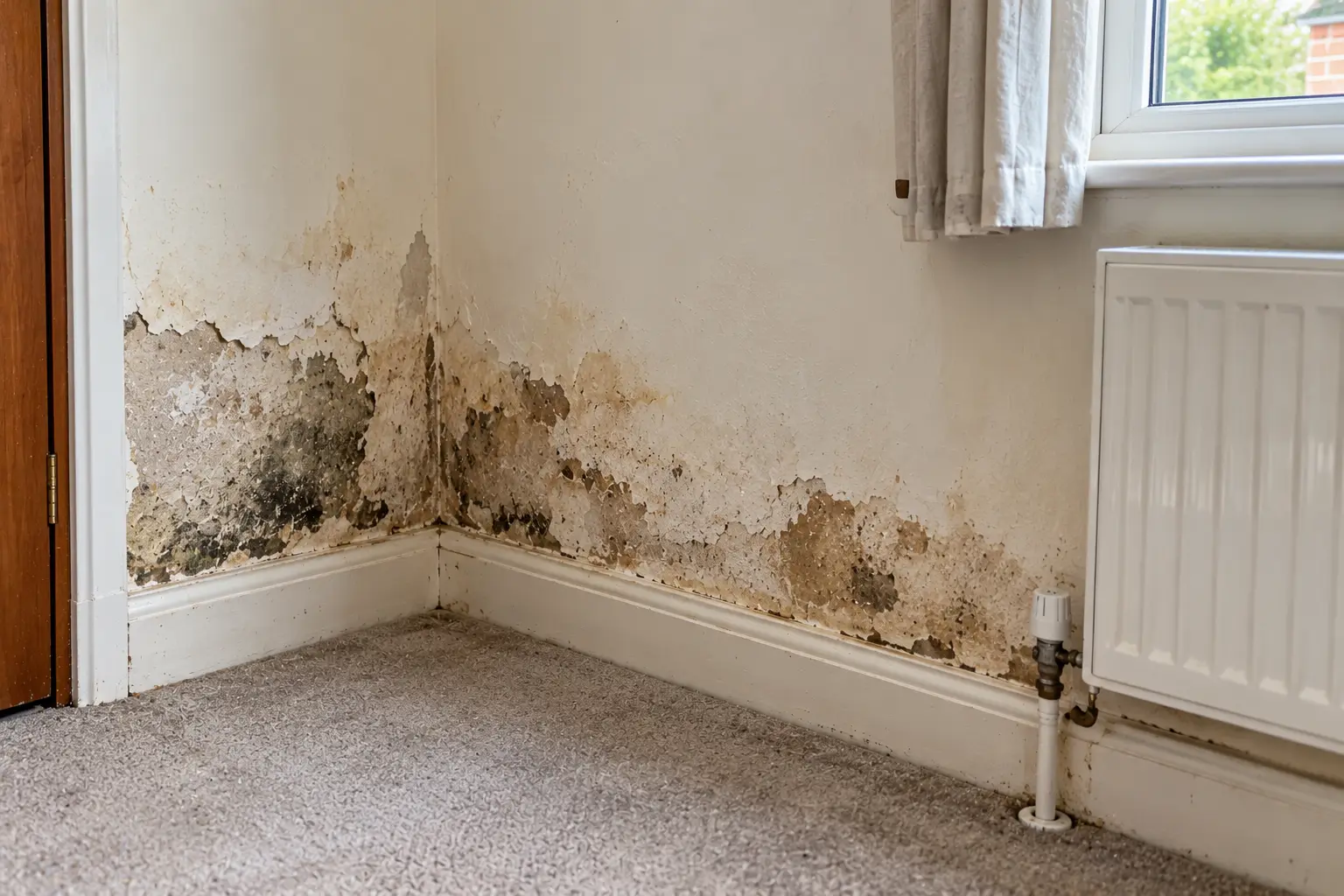
Homes towards Isleworth, Chiswick and Kew Bridge also need assessment on their own merits. A tide mark, dark patch or peeling finish is a clue, not a diagnosis.
Rising damp and the original damp proof course
Rising damp is moisture moving upwards through porous masonry from the ground. In older Brentford homes, an original damp proof course may have failed or become bridged. Low-level staining, damaged plaster and salts can suggest rising damp, although leaks and other moisture sources can produce similar signs.
A bridged course may need the bridge addressed rather than another course installed. Where a replacement barrier is appropriate, an injected damp proof course can form part of the treatment. Damp Pro and Co uses a BBA approved damp proofing system; our rising damp treatment guide explains the purpose of treatment.
Salt-contaminated plaster may also need removal and salt-resistant replastering as part of a suitable specification. Painting over it alone will not deal with salts left in the wall. Completed damp proof course (DPC) work comes with a 20-year guarantee certificate; that guarantee does not cover other work.
Rain entering through walls and building defects
Penetrating damp often becomes more noticeable after rain. On older terraces, defective pointing, cracked render, overflowing gutters and leaking downpipes can let water into masonry. Faulty seals around windows or defects at roof junctions can also produce patches that appear some distance from the entry point.
Exposed riverside walls need careful inspection, but location alone does not identify the defect. The pattern of staining, weather conditions and external condition of the wall should be considered together. Treating an internal surface without stopping the water entering leaves the cause unresolved.
Our penetrating damp treatment information covers this type of moisture problem. An injected DPC is not a substitute for addressing rainwater ingress.
Condensation in riverside flats and older homes
Condensation forms when moisture-laden air meets a sufficiently cold surface. In newer riverside flats, windows, external corners and spaces behind furniture can be affected where indoor humidity is high and airflow is limited. Older terraces can develop the same problem, particularly in rooms with cold external walls.
Cooking, showering and drying clothes indoors all add moisture. Using existing extraction, keeping vents clear and allowing air to circulate around furniture can help. Ventilation improvements may be recommended alongside practical changes to heating and moisture-producing habits.
Damp Pro and Co offers condensation control and mould treatment. Dealing with visible mould should go alongside addressing the moisture conditions that allow it to return.
Arranging your free damp survey
Book a free, no-obligation damp survey and describe the rooms affected, how long the marks have been there and any connection with rainfall or colder weather. Photographs and details of previous repairs can provide useful background, but they cannot replace assessment of the property.
A useful survey considers internal symptoms alongside possible external sources, ground levels and ventilation. Moisture readings need interpretation in context; a high reading alone does not establish rising damp. Access to affected walls and relevant outside areas helps distinguish between possible causes.
The aim is to establish what needs attention before deciding on treatment.
Travelling to Brentford from Ruislip
Run by Seth Long, Damp Pro and Co is based at 8 Manor Road, Ruislip HA4 7LB and works for homeowners across West London and South Bucks. Brentford visits are made from Ruislip, with nearby coverage including Ealing and Southall.
The business has over 30 years' experience, with PCA trained and Safeguard Ltd trained technicians. Open 24 hours, 7 days, we can be contacted on 07803 253337 or freephone 0800 593 0300.
Brentford: common questions
Does living beside the Thames mean I have rising damp?
No. Proximity to water does not diagnose rising damp; the wall construction, ground levels and moisture pattern need assessment.
Can paving cause damp above an existing DPC?
Yes. Raised paving can bridge the course, allowing moisture to bypass it. Removing that bridge may be more appropriate than injection.
Does the guarantee cover mould treatment?
No. The 20-year guarantee certificate applies only to completed DPC work, not mould treatment or other work.
Should I redecorate before the survey?
It is better to leave visible symptoms available for inspection. Fresh paint can hide staining without addressing its cause.
Is the Brentford survey free?
Yes. Damp Pro and Co offers homeowners a free, no-obligation damp survey, with visits from Ruislip.