
A nearby team for Ickenham homeowners
Ickenham is about two miles south-west of our base at 8 Manor Road, Ruislip HA4 7LB. That makes it a short local journey rather than a visit from the other side of London, although appointment timing still needs to be agreed.
Our coverage includes Ickenham’s UB10 addresses in the London Borough of Hillingdon. From Ruislip, we work across West London and South Bucks, covering roughly 12 miles and reaching out towards High Wycombe.
The team has over 30 years' experience, with PCA trained and Safeguard Ltd trained technicians. You can also find local information on our neighbouring Ruislip area page.
Cottages, interwar semis and different damp risks
The older cottages around the village pond and green need a different starting point from the interwar semis beyond the centre. Some of the oldest buildings may lack a physical damp course, but age alone does not establish why a wall is damp.
Around familiar landmarks such as the Ickenham village pump and St Giles Church, period homes sit within a wider mix of 1930s detached houses, semi-detached properties and post-war bungalows. Changes to heating, windows or room use can affect condensation, while external defects can allow rainwater into homes of any age.
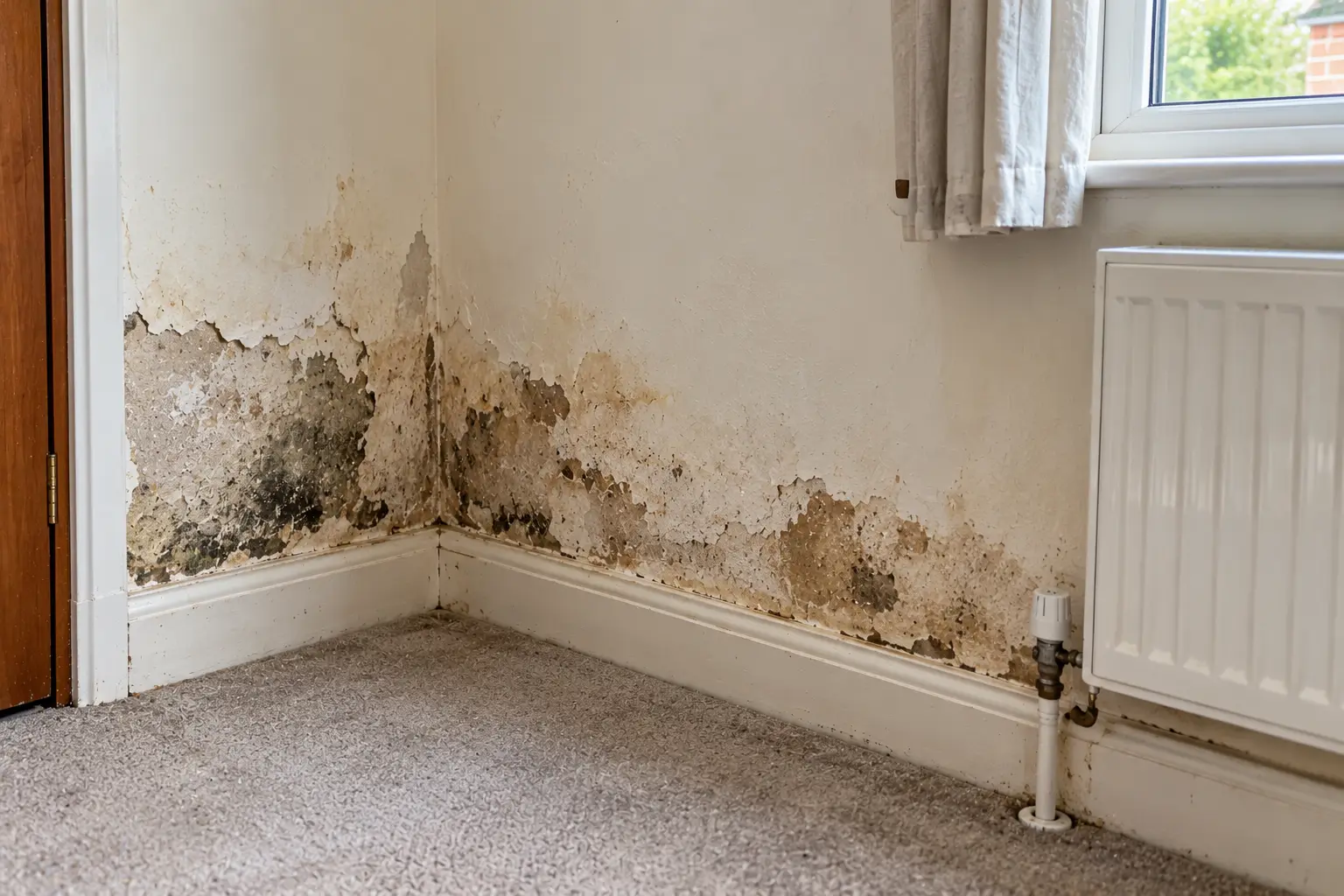
A low patch, peeling paint or damaged skirting is a reason to investigate, not enough on its own to identify rising damp. The pattern and circumstances matter.
Why local ground conditions deserve attention
Ickenham Marsh and the River Pinn are useful reminders of the area’s wet ground conditions. Low-lying gardens near the marsh and within the Yeading Brook catchment can remain saturated through winter.
Wet ground makes outside levels and the position of damp patches worth considering, but it does not mean every nearby house has rising damp. A patch that worsens after rainfall raises different questions from droplets appearing on cold bedroom windows each morning.
Before your survey, note when the damp becomes visible and whether it changes with the weather. Photographs taken over time can help show a pattern that is less obvious on the day.
Six services, matched to the signs in your home
There is no reliable basis for naming one problem as Ickenham’s most common without assessing individual homes. The local housing and ground conditions make these six services relevant for different reasons:
- Free, no-obligation damp survey: a starting point when stains, salts or musty rooms have no clear explanation.
- Rising damp treatment: relevant where moisture at the base of walls needs investigation, particularly in older cottages.
- Damp proof course work: for homes where assessment establishes that a DPC solution is appropriate.
- Penetrating damp treatment: relevant to damp patches associated with rainwater entering the building.
- Condensation control: for moisture collecting on colder surfaces; ventilation improvements may be recommended.
- Mould treatment: for affected surfaces, alongside consideration of the moisture conditions allowing mould to develop.
Detailed guidance for your Ickenham property
For low-level wall damp, visit our rising damp treatment in Ickenham page. Our damp proofing in Ickenham page covers the broader damp proofing service without assuming every damp wall needs a new course.
We use a BBA approved damp proofing system. Completed damp proof course (DPC) work comes with a 20-year guarantee certificate; this does not apply to condensation control, mould treatment or other work.
If moisture is mainly on windows or cold corners, our condensation control service is another useful place to start.
Checks for homes around Swakeleys and the conservation area
Around Swakeleys Road and The Avenue, twentieth-century brick houses include bay windows, projecting sills and tiled roofs. These junctions are useful places to investigate when an upstairs stain follows windy, wet weather: cracked pointing, failed seals beside a bay or defective flashing can admit water. A cavity wall is not automatically immune; debris or insulation bridging the cavity can sometimes provide a route for moisture across it. The stain indoors may appear away from the actual entry point.
In the Ickenham Village Conservation Area, older brickwork may have lime mortar, which allows moisture to evaporate more readily than dense cement pointing. Where hard replacement mortar or impermeable coatings have been applied, moisture can be retained in the masonry, contributing to flaking brick faces. Around Swakeleys Park, nearby trees can also increase the amount of leaf litter reaching gutters; overflowing rainwater goods can repeatedly soak the same stretch of wall.
After a spell of rain, inspect from ground level for overflowing gutters, water tracks beneath joints and downpipes discharging beside the house. Compare these positions with indoor marks, including inside cupboards against outside walls. Avoid climbing onto roofs or removing pointing yourself. If patches track wet weather rather than indoor humidity, guidance on penetrating damp can help you frame the next questions.
Arrange a survey from our Ruislip base
Call 07803 253337 or freephone 0800 593 0300, or request a free damp survey. We are open 24 hours, seven days a week.
Include your postcode, the rooms affected and any link with rainfall or colder weather. This gives us useful context before arranging your survey.
Ickenham: common questions
How do I get a damp survey in Ickenham?
Call either number or use our contact page to request a free, no-obligation survey. Give your UB10 address and a brief description of the problem.
Do you cover nearby streets and postcodes?
We cover Ickenham UB10 and nearby Ruislip, Hillingdon, Uxbridge, Harefield and West Ruislip. Send your full street address and postcode to confirm arrangements for your home.
Which damp problem is most common locally?
We cannot reliably rank them across Ickenham. Older walls, rain exposure and indoor moisture create different risks, so the visible signs need assessment.
Can I call outside normal working hours?
Yes, we are open 24 hours, seven days a week.
Does living near Ickenham Marsh mean I need a DPC?
No. Wet ground is relevant context, not a diagnosis. The cause of damp should be established before deciding whether damp proof course work is appropriate.