
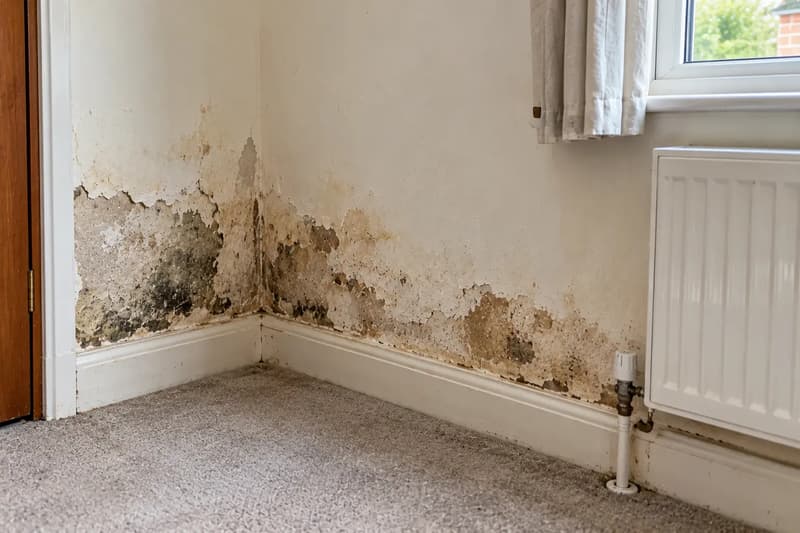
DPC injection installs a water-repellent barrier within a suitable masonry wall to control moisture rising from the ground. A damp proof course, often shortened to DPC, belongs in a diagnosis-led repair: the wall construction, external levels and damaged finishes all affect the specification.
What is DPC injection?
An injected damp course uses a specified cream placed into drilled holes along a mortar joint. The treatment spreads and cures within the masonry to create a water-repellent layer. It is intended to interrupt the upward movement of ground moisture, not to seal every route by which water can enter a building.
Homeowners sometimes use damp course, damp coursing or damp proof courses to describe the whole repair. In practice, a new damp course is one part of a plan that may also involve removing a moisture bridge and replacing contaminated plaster. Our rising damp treatment page explains that wider process.
Compare cream and rods in chemical DPC injection explained.
Establish whether injection is needed
Before specifying work, compare the moisture pattern with outside ground levels and the existing barrier. Old slate and bitumen courses can deteriorate, and some older houses were built without one. However, an existing course may still work while high paving, soil or render lets moisture pass around it.
The first remedy may therefore be correcting a bridge rather than adding another course. Read about bridged damp proof courses for those external checks. Plumbing leaks, rain penetration and condensation need their own investigation; a low stain or isolated meter reading cannot establish that injection is the right answer.
Choosing the treatment line and access
The wall needs checking for thickness, materials and changes in construction. The selected mortar course must relate sensibly to inside floor levels and outside ground. Continuous treatment also needs appropriate consideration at corners, returns and junctions rather than stopping wherever the visible stain ends.
Holes are drilled at the spacing and depth required by the specified system, inside or outside as the job requires. A BBA approved damp proofing cream is injected. It spreads through the mortar and cures to form a continuous water-repellent layer. Holes are filled, and internal walls are replastered with a salt-resistant system where plaster has been damaged.
Preparation, plaster and drying
Access to the lower wall and protection of nearby finishes should be discussed before work begins. If affected plaster must be removed, the quotation should make clear which surfaces need preparation and how they will be made good. Ask about skirting, floor protection and any areas concealed by fitted furniture.
Salts remaining in damaged plaster can attract moisture from indoor air even after upward movement is controlled. Replacing the affected finish with a suitable salt-resistant system can therefore matter as much as installing the barrier. The cream cures within the masonry while moisture remaining in the wall takes longer to dry out. Follow the advice for the specified finish before decorating.
What changes the scope and cost?
Wall length and thickness, access, construction changes and the amount of plaster repair influence the work involved. Outside levels or previous alterations may introduce further preparation. A written quotation should distinguish the injected course from any separate repairs rather than treating every damp-related item as the same operation.
Our damp proofing cost guide explains these factors. Ask what evidence supports a new course, which treatment line is proposed and how adjoining surfaces will be finished.
Guaranteed, trained and trusted
All our DPC work comes with a 20-year guarantee certificate on completion. Our technicians are PCA trained and Safeguard Ltd trained, and Seth Long and the team bring over 30 years' experience to every job.
We are rated 9.82 on Checkatrade from 389 reviews and 4.9 on Google.
For the certificate issued on completion of damp proof course work and payment, see our DPC guarantee guide. Keep the quotation and certificate together so you have the specified work and its paperwork to hand.
Book a damp course specialist assessment
Looking for DPC injection near you? Start with a free damp survey rather than choosing a treatment from a photograph. Tell us about low wall damage, outside paving and any earlier damp work. Use the quote form or call 07803 253337 to discuss your home.
For property-specific guidance on older brick and flint and later family houses, see damp proofing in Beaconsfield.
A Modern, More Effective, Long-Term Approach to Damp Proofing
We use a Safeguard BBA-approved damp proofing system that provides a more effective, modern alternative to traditional sand and cement remedial plastering systems.
Our approach is designed to address the different causes and effects of damp rather than simply covering the visible symptoms. Where required, this includes the installation of a new chemical DPC injection to protect against rising damp, together with appropriate remedial measures for areas affected by penetrating damp.
Following preparation of the affected walls, Permabreathable salt-inhibiting cream is applied directly to the exposed brickwork, treating and protecting the masonry before the new internal wall system is installed.
What makes the system particularly effective is the purpose-designed cavity created between the treated brickwork and the new finished board. Unlike traditional sand and cement systems, where remedial render is applied directly onto the masonry, our finished internal surface is physically separated from the original wall.
This combination of new DPC protection, Permabreathable treatment, salt protection and physical cavity separation provides a comprehensive approach to damp proofing, addressing the source of the problem while protecting the new internal finish.
Rising Damp, Penetrating Damp and Salt Contamination
Different properties can suffer from damp for different reasons, which is why we do not rely on a single treatment. Where rising damp is identified, a new chemical DPC is injected into the affected walls. Where penetrating damp or salt contamination is found, the Permabreathable salt-inhibiting treatment and cavity system protect the new internal finish.
Safeguard Europe is the manufacturer whose damp proofing products we use.
For the existing homeowner damp assessment offer, see our free damp survey page.
Damp proof course (DPC) installation questions
Does DPC injection work?
It can control rising moisture in suitable masonry when correctly specified and installed. Bridges, other water sources and salt-damaged finishes must also be addressed; injection is not a remedy for every damp wall.
What is damp injection?
For a damp proof course, it means placing a specified water-repellent treatment into drilled holes in a mortar joint. The cured barrier is intended to interrupt ground moisture rising through the wall.
Is DPC injection messy?
Some dust is unavoidable when old plaster is removed, but we protect floors and furniture and clear up at the end of each day.
Can a DPC be installed from outside?
Often yes, depending on wall construction and access. We will recommend the best method after the survey.
Do I need to move out?
No. Most homeowners stay in the property while the work is carried out.
What is DPC cream?
It is a silane-based damp proofing cream injected into the mortar course. It cures inside the wall to form a water-repellent barrier that stops ground moisture rising.
How do I know if my house needs a new damp proof course?
Low-level damp on ground-floor walls, with a tide mark and salty plaster, is the usual pattern, but bridging and leaks can look similar. A survey with moisture readings and outside checks confirms whether a new course is the right answer; see signs of rising damp.
Is a damp proof course the same as a damp proof membrane?
No. A course is a barrier within the wall itself, while a membrane is a sheet material used on floors or walls in some repairs. Our guide to damp proof membranes explains where each one is used.