

What a DPC guarantee means
A damp proof course is intended to interrupt moisture moving upwards through suitable masonry. A guarantee records a commitment relating to the specified work, subject to its actual wording. The certificate explains which work is covered. Rainwater entering through a gutter defect and condensation on cold walls have different causes.
For a homeowner, the document helps connect a treatment to the company that carried it out. A buyer may also want to understand earlier damp work, but the existence of a certificate does not establish the current condition of a property. Read the description of the treated walls and the written terms alongside the length of the guarantee.
Why diagnosis and the specification matter
Guarantees commonly depend on the work being appropriate for the diagnosed problem and completed according to its specification. A new course cannot be expected to remedy an unrelated moisture source. Before choosing damp proof course treatment, ask what evidence supports rising damp and whether external ground levels or other defects need attention first.
Correct treatment, suitable preparation and properly specified replastering may matter to the result. Payment requirements can also affect when a certificate is issued. Ask your contractor for the terms and how they relate to the proposed work.
Our 20-year guarantee certificate
Damp Pro and Co issues a 20-year guarantee certificate on completion of damp proof course work and payment. If you want to know exactly what the certificate covers for your walls, ask during the survey and we will talk you through it.
Ask during the survey if you need clarification about a particular wall, an associated repair or the documentation you will receive. Keep the answer with the proposal so you can refer to it when deciding whether to proceed. A clear written scope saves confusion later.
Replastering is a separate question to ask
Rising moisture can leave salts in plaster after the source has been controlled. Some salts attract moisture from the air, and a wall may retain water while it dries. Those conditions can affect the finish even when the treatment to the masonry is appropriate. Injection and the condition of the plaster therefore need considering together.
Our replastering after damp proofing guide explains why removal boundaries, replacement materials and decoration instructions matter. Ask whether the proposed replastering is included in the work and whether any guarantee wording applies to it. Also establish who will handle fittings, skirting and final decoration, so the agreed responsibilities are clear.
Questions to ask before agreeing to treatment
Ask any damp company to identify the work covered, the issuing business and the point at which documentation becomes available. Request the terms before relying on the guarantee. If you are comparing proposals, check whether they treat the same walls and include the same preparation; similar durations do not necessarily describe equivalent commitments.
Useful questions include: does the certificate identify the property and treated areas? What does it say about reporting a concern? Are there conditions concerning maintenance, later alterations or work by others? Is there any stated arrangement for a future owner? If a term matters to you, ask for a written explanation and keep it with the contract documents.
Why the survey comes first
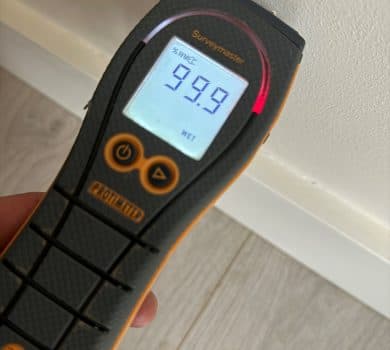
A stain near the floor can prompt concern about rising damp, but its location alone does not prove that diagnosis. Leaks, rainwater, bridging and indoor moisture can leave overlapping signs. Our signs of rising damp guide describes clues to report rather than a test you can use to choose treatment without assessment.
Damp Pro and Co offers a free damp survey for homeowners. The survey provides the starting point for discussing the moisture source and any proposed rising damp treatment. You can then ask guarantee questions against a specific recommendation instead of trying to interpret a certificate for unspecified future work.
Keeping a useful record for the future
Keep the certificate, accepted quotation, treatment description, invoices and evidence of payment together. Retain any drawings or photographs that show the treated areas, plus instructions about drying and decorating. A simple record helps distinguish what was done from later changes to the house. It can also make a future conversation about recurring symptoms more precise.
When selling, provide the documents to the professionals handling the sale if requested. The certificate helps explain the earlier work, while the buyer’s survey assesses the property’s current condition. For questions about our DPC work or to book a survey, call 07803 253337 or contact Damp Pro and Co.
Common questions
When do I receive the guarantee certificate?
Damp Pro and Co issues the 20-year guarantee certificate on completion of damp proof course work and payment.
Does the guarantee cover replastering?
Ask during the survey. We will explain what is included for your property in the written proposal.
What should I keep with the certificate?
Keep the quotation, work description, invoices, payment records and any treatment drawings or photographs, along with drying and decoration instructions.
Is a guarantee useful when I sell my house?
It can help explain previous treatment to a buyer, but its usefulness depends on the wording and their requirements. Keep it with your property documents and share it with the buyer's surveyor or solicitor if they ask.
Do I need a survey before treatment?
Yes. Establish the moisture source and suitable response before choosing DPC work. Damp Pro and Co offers a free damp survey for homeowners.