
Harefield’s housing and valley ground
Harefield sits on the northern edge of the London Borough of Hillingdon, in the Colne Valley beside the Grand Union Canal and flooded gravel-pit lakes. Across UB9, older cottages around the green sit alongside interwar and postwar homes, so wall construction and existing damp protection can vary considerably.
High groundwater near the valley floor makes ground conditions relevant, but proximity to water does not prove rising damp. Raised garden beds, paving against walls and rainwater defects also need consideration. In older cottages, the suitability of existing plaster and wall finishes matters alongside the source of moisture.
Rising damp, bridged courses and suitable treatment
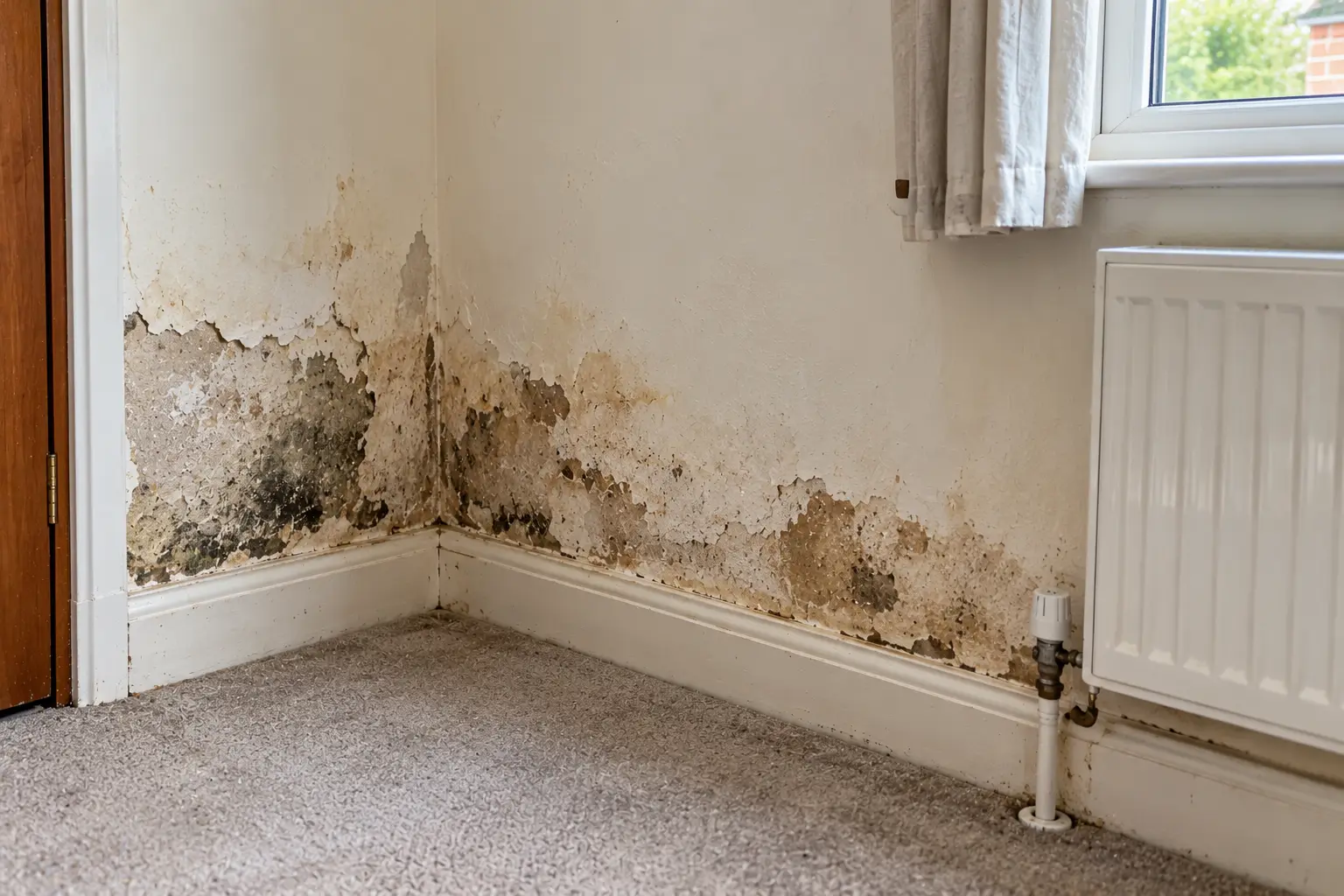
Rising damp is ground moisture moving upwards through porous masonry. Low-level staining, deteriorating plaster and salt deposits can be clues, although none confirms the cause on its own. In Harefield’s older and later homes alike, an original damp proof course may have failed or been bridged by soil, paving or render.
A bridged course needs a different response from a missing or ineffective barrier. Removing the bridge may be necessary rather than simply adding another DPC. Our rising damp treatment uses a BBA approved damp proofing system, with the choice of treatment depending on the wall and diagnosis.
An injected DPC can form a barrier against rising moisture where the construction is suitable. Salt-contaminated plaster may also need removal and replacement with salt-resistant replastering; a new barrier does not remove salts already in the wall. Completed DPC work carries a 20-year guarantee certificate, which does not extend to other work.
Rain getting through the outside of a wall
Penetrating damp comes from water entering through defects rather than rising from the ground. Around Harefield, checks worth making include overflowing gutters, leaking downpipes, worn pointing, cracked render and gaps around window frames. Roof junctions and chimney details can also allow water into the building.
On older cottages, weathered masonry joints deserve attention; on interwar and postwar houses, cracked finishes or poorly shedding sills can be relevant. These are possible defects, not assumptions about every home of that age. A patch that darkens after rainfall is useful evidence to mention during a survey.
The route of entry needs addressing before decorative repairs can last. Penetrating damp treatment concerns this type of water ingress; a new DPC is not the answer to a leaking gutter or an exposed crack.
Condensation and mould indoors
Condensation is more likely when moisture from everyday activities meets cold surfaces. Bedroom windows, outside corners and walls behind tightly placed furniture are common places to notice it. It can occur alongside rain penetration or rising damp, so one explanation should not automatically rule out another.
Damp Pro and Co provides condensation control and mould treatment. Practical recommendations may include ventilation improvements, using existing extractor fans, keeping background heat steadier and allowing air around furniture. Cleaning mould without tackling the moisture conditions can leave the underlying problem unresolved.
Starting with a free damp survey
Arrange a free, no-obligation damp survey by phone or through our contact page. Explain which rooms are affected, how high the marks reach and whether they change after rain or during colder weather. Photographs of recurring patches can help you describe changes that are not visible on the day.
A useful assessment considers the pattern indoors alongside possible sources outside, including ground levels and rainwater drainage. Moisture readings need interpreting in context rather than treating one high reading as proof of rising damp. The aim is to distinguish the cause before deciding between damp proofing, repairs or condensation measures.
Keep affected areas accessible if practical, and mention previous DPC work or replastering. There is no need to strip finishes simply to make an initial enquiry.
Travelling to Harefield from Ruislip
Run by Seth Long, Damp Pro and Co is based at 8 Manor Road, Ruislip HA4 7LB. We work for homeowners across West London and South Bucks, including nearby Denham, Ickenham, Uxbridge and Ruislip. Our technicians are PCA trained and Safeguard Ltd trained, with over 30 years' experience.
Call 07803 253337 or freephone 0800 593 0300 to discuss damp in your Harefield home. We are open 24 hours, 7 days.
Harefield: common questions
Does living near the canal mean I have rising damp?
No. Valley ground conditions are relevant, but the moisture source still needs establishing. Rain penetration and condensation can produce overlapping symptoms.
Can paving bridge an existing DPC?
Yes. High paving or soil can let moisture bypass the barrier. Ground levels should be checked before deciding that injection is needed.
Will stained plaster need replacing?
Not always. Its condition and salt contamination matter. Salt-resistant replastering may be appropriate after confirmed rising damp, rather than simply repainting.
What does the 20-year guarantee cover?
The 20-year guarantee certificate applies to completed damp proof course work only. It does not cover other work.
Is the Harefield damp survey free?
Yes. Damp Pro and Co offers homeowners a free, no-obligation damp survey. Call either number to arrange one.