
Written by Seth Long, Damp Pro and Co · Last updated: 7 October 2026
What a DPC does and where it sits
A damp proof course is a horizontal barrier built into a wall a short way above outside ground level. In older houses it may be a layer of slate laid in the mortar, in many twentieth-century homes it is a strip of bitumen felt, and in walls that have been treated later it is often an injected chemical barrier. Whatever the material, the job is the same: stop water in the soil from soaking upwards through bricks and mortar into the rooms above.
From outside you can sometimes spot the line of an original course as a thin dark strip two or three courses of brick up from the ground. Inside, it should sit below the level of a suspended timber floor or roughly level with a solid floor. Knowing where it is matters, because almost every bridging problem comes down to something wet touching the wall above that line.
The 150 mm rule, in plain English
Building guidance has long said the outside ground, paths and paving should finish at least 150 mm below the damp proof course. That gap is roughly two bricks deep. It keeps splashing rain off the wall above the barrier and stops wet soil sitting against masonry that the DPC is meant to protect.
When the ground creeps up over the years, through new paving laid on top of old, a gravel border topped up or a driveway rebuilt higher, the gap shrinks. Once soil or paving rises above the course, water can enter the brickwork above the barrier and wick inwards as if the DPC were not there at all.
Common bridges to look for
Most bridges are ordinary garden or building changes that nobody thought of as a damp risk at the time. The usual culprits are:
- Raised patios and paths laid against the house wall, especially where a new surface went straight over an old one
- Flower beds and planters built up against the brickwork, keeping soil permanently wet against the wall
- Render or external plaster taken down past the DPC, giving water a continuous route over the barrier
- Internal plaster carried down to a solid floor, letting moisture travel up the plaster face indoors
- Mortar droppings and builders' debris collected at the bottom of a cavity wall, linking the outer and inner leaves
Signs indoors
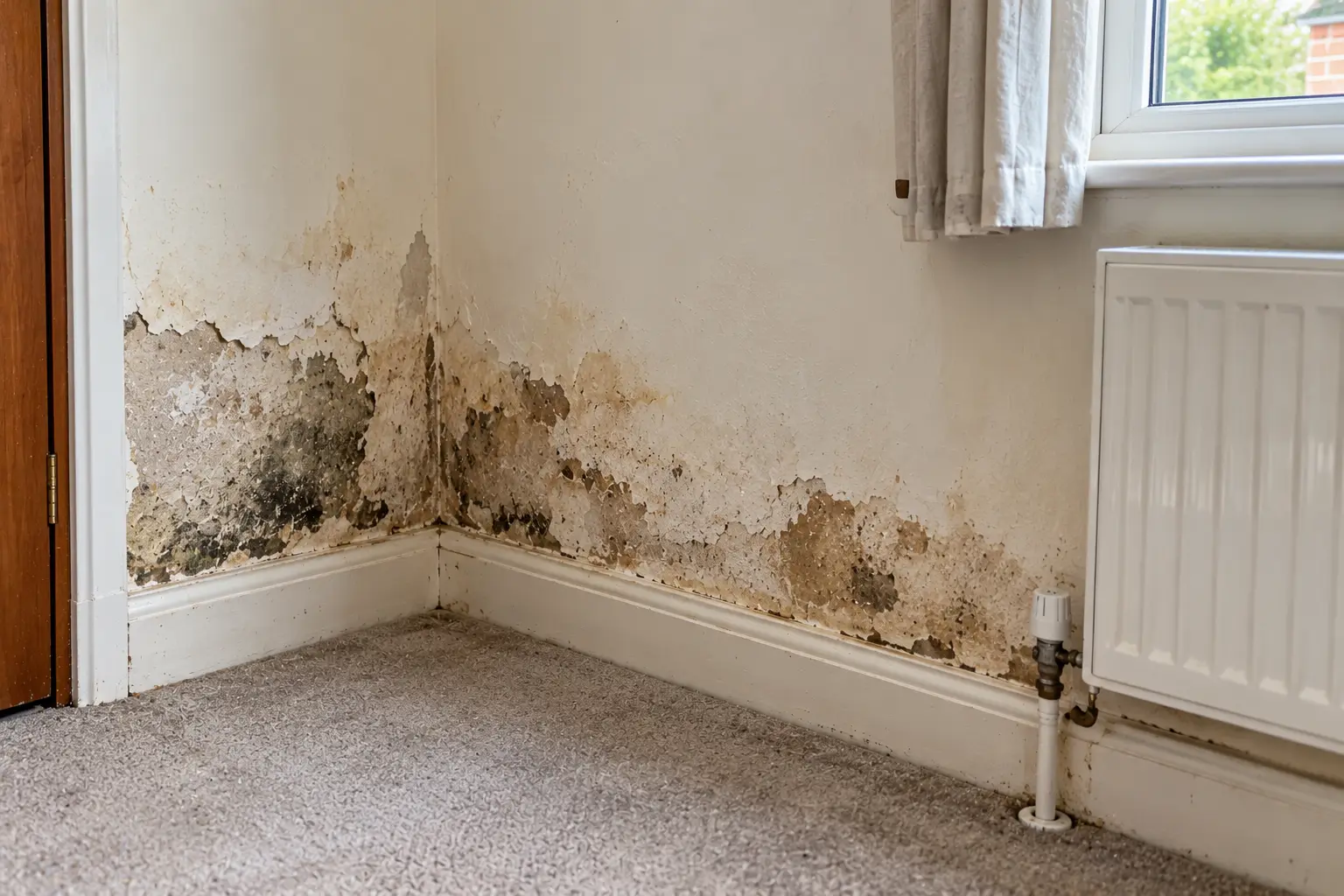
A bridged course produces much the same symptoms as a failed one. You may notice a brown tide mark low on the wall, paint bubbling or wallpaper lifting just above the skirting, and white salts on the surface. Our guide to the signs of rising damp describes these in more detail.
One useful clue is position. Bridging tends to show along the stretch of wall behind the raised patio or flower bed rather than right round the room. If the damp lines up neatly with something outside, that link is worth checking before anyone talks about injecting a new barrier.
Checking your own house from outside
Walk round the outside of the house on a dry day and look at the base of each wall. Try to find the line of the existing course, then compare it with the ground, paving and any planting against it. Note anywhere the gap looks less than about two bricks, and any place where render runs right down to the ground with no bell-mould or break.
Check that air bricks for suspended floors are clear and not buried, and look for gutters or downpipes splashing onto the base of the wall, as these keep the same area soaked. Photographs of each elevation make a useful record when you discuss the problem with a specialist.
Fix the bridge first, then decide on injection
Where bridging is the cause, removing it is the first step. That might mean lowering or cutting back paving, adding a channel drain, moving a flower bed away from the wall, or cutting render back above the course. Debris in a cavity can sometimes be cleared by removing a few bricks at low level.
Only once the bridge is dealt with can anyone judge whether the original barrier still works. If moisture readings and the pattern of damage show it has also failed, a new injected course may be needed; our page on damp proof course installation explains how that is done. Where rising damp is confirmed, rising damp treatment also covers removing salt-damaged plaster and replastering. Render that bridges a course can also let rain in, which our guide to cracked render and penetrating damp covers.
How long a damp proof course lasts
There is no single lifespan. Slate can last for the life of a building unless movement cracks it, while bitumen felt can become brittle over many decades. A sound course can also appear to fail simply because it has been bridged, which is why bridging is checked first.
Damp Pro and Co provides a 20-year guarantee on DPC work, with the certificate issued on completion and payment. Keeping ground levels low and the wall base clear afterwards helps any course, old or new, keep doing its job. Call Seth on 07803 253337 or freephone 0800 593 0300 to talk through what you have found.
Questions about this topic
What height should a damp proof course be?
The usual guidance is that outside ground and paving should finish at least 150 mm below the course, roughly two bricks.
Can a new patio cause rising damp?
It can if it is laid above the existing course. Water can then enter the wall above the barrier and show as damp low down indoors.
Does a bridged DPC need re-injecting?
Not always. Remove the bridge first, then check whether the original course still works before deciding on a new damp proof course.
How long does a damp proof course last?
It varies with the material and the building. Our DPC work carries a 20-year guarantee, with the certificate issued on completion and payment.
Can render cause damp?
Yes. Render taken down past the course can bridge it, and cracked render can let rain into the wall.
Related guides
- Signs of rising damp
Tide marks, salty plaster, lifting skirting and the outside checks that show whether damp is rising from the ground.
- Cracked render and damp
How cracked or hollow render lets rain in, why hard render traps moisture and how repairs are decided.
- Blown plaster
Hollow, bulging or bubbling plaster: when salts and damp are behind it, and when it is simply age.