
Written by Seth Long, Damp Pro and Co · Last updated: 7 October 2026
1. Check that condensation is the cause
Condensation forms when moist air meets a surface cold enough for water vapour to turn into droplets. Windows, external wall corners and areas behind furniture are common places to find it, particularly during colder weather.
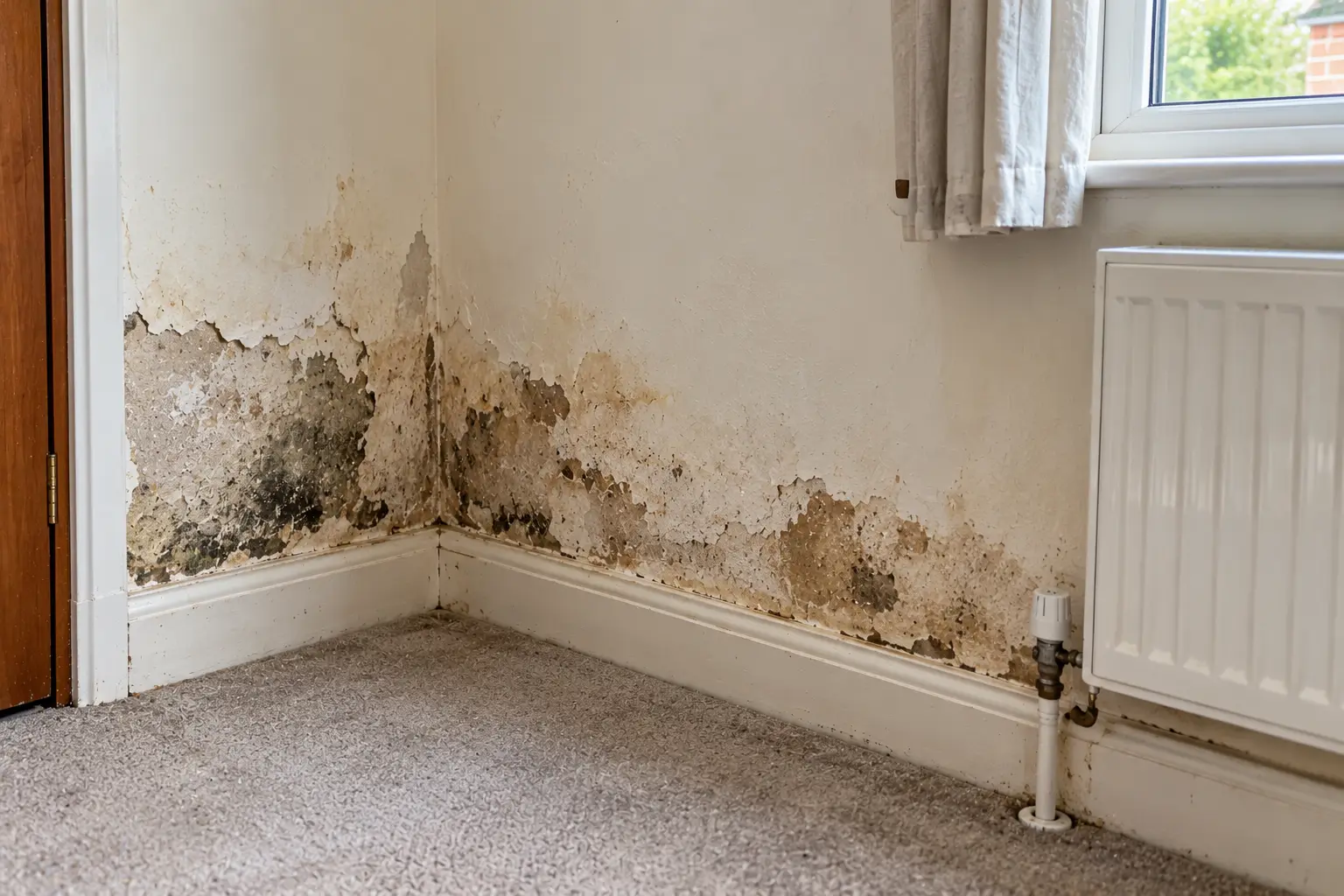
Morning window droplets that clear during the day suggest condensation, but a damp patch alone does not prove the cause. Patches that worsen after rain, staining near plumbing or persistent damp at the bottom of a wall need investigation rather than simply more airing.
Note when moisture appears and what happens beforehand. Cooking, showers and indoor clothes drying often reveal a pattern, while photographs taken over several days can help explain an intermittent problem.
2. Clear window moisture and use existing vents
Wipe condensation from glass, frames and sills each morning, rather than leaving water to soak into nearby finishes. Wring the cloth into a sink; leaving a soaked towel on a radiator puts that moisture back into the room.
Keep window trickle vents open and clear of dust. Open windows briefly when safe and practical, especially after moisture-producing activities, without leaving rooms chilled for hours.
Heavy curtains and blinds can trap cold air against glass. Open them in the morning and leave space for air to circulate where possible. Moisture trapped between sealed double-glazing panes usually indicates a glazing seal problem, not something indoor ventilation will resolve.
3. Keep cooking, showering and washing moisture contained
Remove moisture close to where it is produced before it spreads into bedrooms and colder rooms. Keep kitchen and bathroom doors closed during cooking and showering, while allowing the airflow the extractor needs through its intended air path.
- Cooking: use pan lids and an extractor that discharges outdoors. A recirculating cooker hood filters air but does not remove water vapour outside.
- Showers: run the extractor during use and afterwards until lingering moisture clears. Wipe down wet shower surfaces to reduce water left to evaporate.
- Washing: dry outdoors when practical. Indoors, use a separate room with the door closed and effective extraction or controlled airing, rather than spreading clothes across radiators.
- Tumble dryers: follow the manufacturer's instructions for venting, emptying water containers and cleaning filters.
4. Give bedroom walls room to breathe
Breathing adds moisture overnight, so a closed bedroom can have wet windows by morning even without washing drying nearby. Keep trickle vents open and give the room a brief airing after getting up.
Leave a gap of several centimetres between furniture and cold external walls. Avoid packing wardrobes tightly against damp corners, and check behind headboards where limited air movement can hide condensation on walls.
Let bedding air before covering it for the day, and avoid drying clothes in the bedroom. Our guide to mould in bedrooms explains common problem areas. If mould keeps returning, mould treatment should be considered alongside measures to control the moisture causing it.
5. Avoid large swings in room temperature
Cold surfaces encourage condensation, so aim for reasonably steady warmth in occupied rooms within your household budget. Short bursts of high heat may warm the air without warming walls sufficiently, especially after a room has been cold all day.
Keep radiators clear of furniture and drying clothes so heat can circulate. Closing a door between a warm, moisture-producing room and a much colder room can limit moisture reaching cold surfaces.
Heating alone does not remove water vapour. Pair sensible heating with moisture reduction and ventilation rather than turning up the thermostat while keeping every vent shut.
6. Check extraction before considering whole-house ventilation
Clean accessible extractor covers according to the manufacturer's instructions, switching off power as directed. If a fan seems ineffective, have its airflow and duct route checked; noise alone does not show that it is removing enough moist air.
Do not block permanent vents to stop draughts. Ventilation needs an incoming air path as well as a route for stale, moist air to leave.
Where positive input ventilation may fit
Whole-house ventilation manages airflow across the home rather than relying only on occasional window opening. Positive input ventilation is one option, introducing filtered air to help dilute moisture and encourage air exchange. Suitability depends on the building, air escape routes and existing extraction, so seek an assessment before choosing a system.
7. Use dehumidifiers as support, not the whole answer
A dehumidifier removes moisture from indoor air and can help during clothes drying or a particularly damp spell. Follow its placement instructions, keep filters clean and empty the tank or check the drain regularly.
It treats the symptom, not the underlying reason moisture builds up. It cannot repair a leak, warm a cold wall or replace ventilation.
If practical changes do not help, Damp Pro and Co offers condensation control and a free, no-obligation damp survey for homeowners across West London and South Bucks. We can recommend ventilation improvements.
Questions about this topic
Should I leave windows open all night?
Not necessarily. Use trickle vents and effective extraction first; consider security, weather and how cold the room becomes before leaving windows open overnight.
Will new windows stop condensation?
Warmer glazing may reduce surface droplets, but indoor moisture still needs an escape route. Airtight replacements without suitable ventilation can leave moisture collecting elsewhere.
Can condensation affect just one wall?
Yes. A particularly cold wall or sheltered corner may collect moisture first. However, a persistent isolated patch also warrants checking for leaks or penetrating damp.
Does anti-mould paint solve condensation?
No. Paint does not remove water vapour or correct poor airflow. Address the moisture source and follow suitable surface preparation instructions before redecorating.
How can I arrange a damp survey?
Call 07803 253337 or freephone 0800 593 0300 for a free, no-obligation damp survey.
Related guides
- Mould in the bedroom
Why bedrooms suffer most: overnight moisture, wardrobes on cold walls and the habits that make a difference.
- Black mould on walls
How to clean black mould safely, why it keeps coming back and how to find the moisture behind it.
- Rising damp vs condensation
How to tell the two most common causes of damp walls apart, and why the treatment is completely different.