
Written by Seth Long, Damp Pro and Co · Last updated: 7 October 2026
Start with the building, not the stain
Victorian solid walls have no cavity separating the outer masonry from the inside face. Defective pointing, leaking gutters and unsuitable repairs can leave these walls vulnerable to moisture; covering a stain without addressing its source rarely provides a lasting answer.
Many 1930s semis have cavity walls, but construction varies. Check rather than assume, particularly around extensions. Flat conversions can have shared gutters, altered room layouts and internal bathrooms, so the source may sit outside your own flat.
London Clay drains slowly and can encourage water to linger where surface drainage is poor. That does not prove rising damp: check where rainwater goes and whether paths slope towards the building.
- For shared buildings, report leaks to the freeholder or managing agent before arranging alterations.
Work out which moisture pattern you have
Penetrating damp often becomes more noticeable after rain, near an external defect. Condensation commonly appears on cold windows, corners and surfaces behind furniture, especially when moisture from cooking, bathing or drying clothes cannot escape.
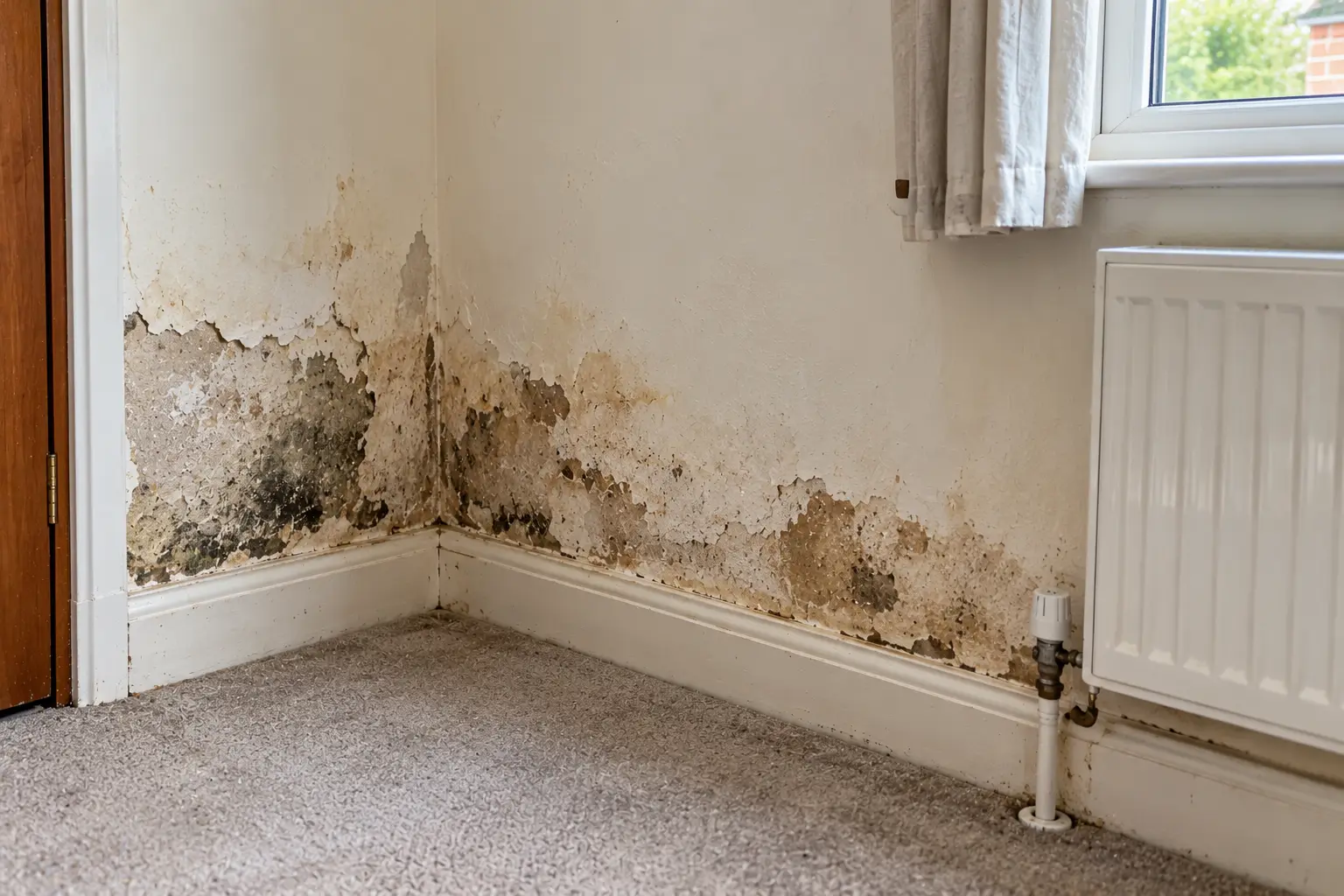
Rising damp affects lower wall areas, but low staining alone is not enough to diagnose it. Bridged damp proof courses, plumbing leaks and condensation can produce overlapping signs.
Use our guides to types of damp and signs of rising damp as starting points, not substitutes for inspection. A single handheld moisture reading cannot establish the cause.
- Photograph affected areas and note dates, rainfall, heating patterns and any nearby plumbing use.
Spring: check what winter has left behind
Once winter rain eases, inspect the outside from ground level. Look for gutter staining, overflowing joints and downpipes discharging beside the wall; use a suitable contractor for work at height.
Check visible pointing for open joints or crumbling mortar, particularly below leaking gutters. Older solid walls need compatible repair materials, so get advice before replacing large areas with hard cement mortar.
- Clear leaves and debris from accessible gullies without pushing waste into drains.
- Check airbricks are unobstructed by soil, leaves or stored items; do not seal them to stop draughts.
- Look behind furniture on external walls for winter mould or damp patches.
- Record damage before redecorating so recurring patches remain traceable.
Summer: review ground levels and plan repairs
Dry weather makes external maintenance easier, but a faded stain does not necessarily mean the cause has gone. Check ground and patio levels before landscaping, especially where paving has been raised against older walls.
Where a conventional damp proof course is visible, external ground should generally sit at least 150mm below it. Older buildings can differ, so do not excavate beside foundations or lower paths without appropriate advice.
- Keep paving and soil from bridging the damp proof course or covering airbricks.
- Check patios shed water away from walls towards suitable drainage.
- Arrange repairs to defective pointing and rainwater goods.
- Maintain airflow behind wardrobes rather than pushing them tightly against cold external walls.
Autumn: prepare for longer wet spells
Falling leaves can block gutters surprisingly quickly. Check them again after nearby trees have shed their leaves, and watch from a safe position during rainfall for overflow or water running down brickwork.
Give heating and ventilation habits attention before windows stay closed for longer periods. Existing extractor fans should discharge outside, and their accessible grilles need cleaning according to the manufacturer's instructions.
- Check downpipes connect properly and gullies take water without backing up.
- Keep airbricks clear after gardening or leaf clearance.
- Avoid drying washing against radiators without a route for moisture to escape.
- Note recurring rain-related patches and arrange investigation before covering them.
Winter: manage indoor moisture consistently
Cold surfaces make condensation more likely, particularly in bedrooms and rooms used intermittently. Aim for reasonably steady heating within your means, alongside ventilation: heating alone does not remove moisture.
Close kitchen and bathroom doors during moisture-producing activities, use existing extraction and allow it time to clear humid air afterwards. Brief window opening can help when safe and practical; leave intended background vents unobstructed.
- Wipe condensation from windows and sills rather than allowing water to collect.
- Dry clothes outside when possible; otherwise use a ventilated room with the door closed.
- Check cold corners weekly for recurring mould.
- Investigate persistent damp rather than repeatedly painting over it.
When a damp survey makes sense
Book an assessment if patches keep returning, plaster deteriorates or the cause remains unclear after basic checks. Sudden plumbing leaks need prompt attention from the appropriate trade rather than waiting for a routine damp survey.
Damp Pro and Co offers homeowners a free, no-obligation damp survey. Based in Ruislip, we cover West London and South Bucks; check our service areas before booking.
Call 07803 253337 or freephone 0800 593 0300. We are open 24 hours, 7 days.
Questions about this topic
Does every Victorian house need a new damp proof course?
No. Establish the moisture source first; drainage, rainwater defects or condensation may explain the symptoms.
Can raised flowerbeds cause damp?
Yes. Soil against walls can bridge a damp proof course, obstruct airbricks and hold moisture beside masonry.
Should I block an airbrick in winter?
No. It may ventilate a suspended floor; blocking it can allow moisture to build up beneath the floorboards.
Will opening windows solve every damp problem?
No. Ventilation helps manage condensation, but it will not repair leaking gutters, defective masonry or plumbing leaks.
What should I have ready for a survey?
Gather photographs, notes about timing and details of previous repairs. Clear access to affected walls where practical.
Related guides
- Types of damp
Rising, penetrating and condensation damp side by side: causes, where each appears and how each is treated.
- Signs of rising damp
Tide marks, salty plaster, lifting skirting and the outside checks that show whether damp is rising from the ground.
- How to stop condensation
Practical ways to stop condensation on windows and walls, from drying washing to extractor fans and ventilation.