
Written by Seth Long, Damp Pro and Co · Last updated: 7 October 2026
Start with the cause, not just the mark
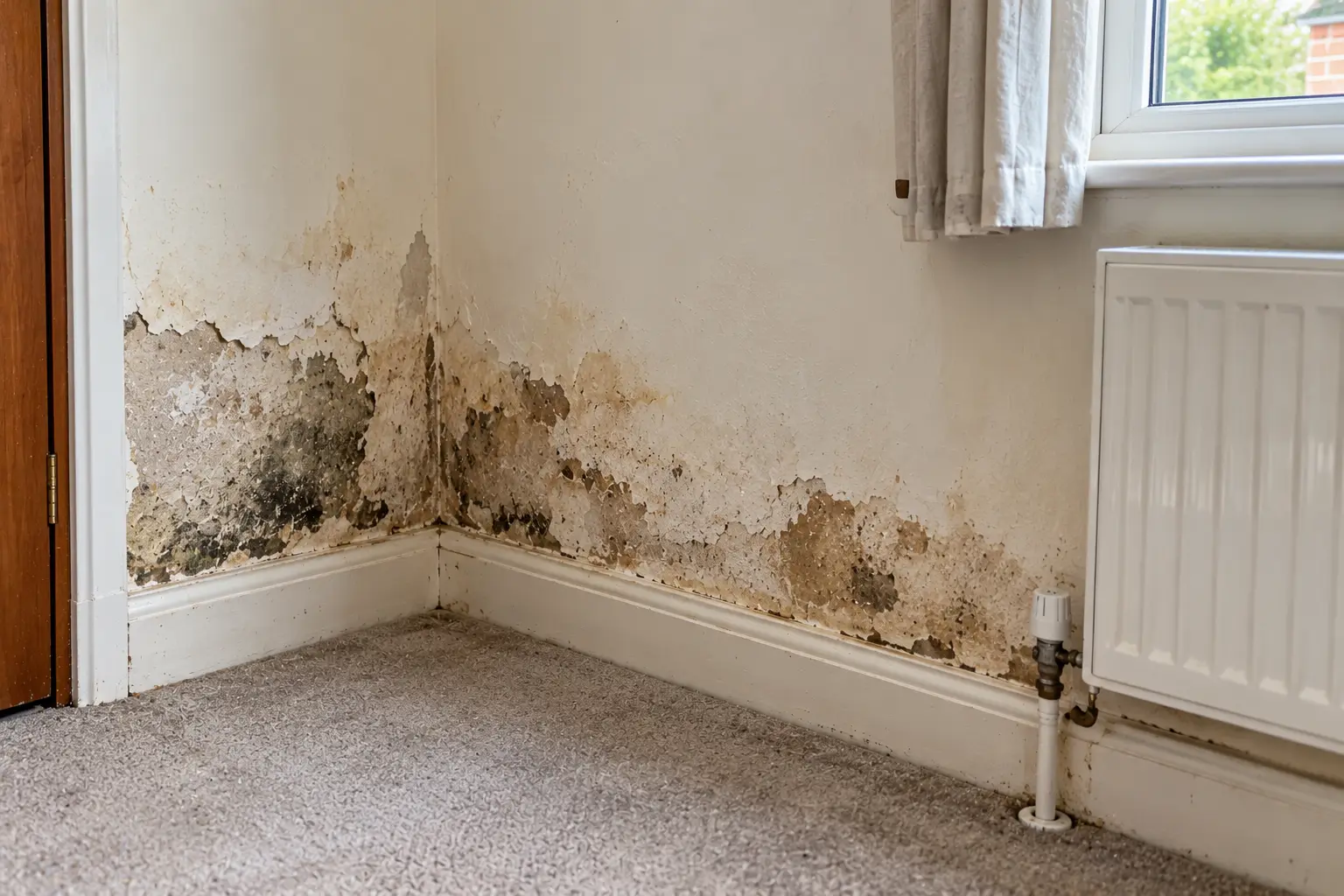
A dark patch tells you where mould is growing, but not necessarily why. Condensation, penetrating damp and rising damp need different responses, so the appearance of a stain alone is not enough to decide the work.
Cleaning may improve the surface without resolving the conditions that allowed mould to develop. When comparing proposed work, check whether it covers visible mould, the underlying moisture problem, or both. Our guide to black mould on walls explains the signs worth noting before arranging an assessment.
- Record which rooms and surfaces are affected.
- Note whether patches return after cleaning.
- Mention any apparent link with cold weather, rainfall or everyday moisture.
The affected area and number of rooms
One patch around a bedroom window is a different scope of work from mould across several walls in several rooms. Both the overall area and its distribution matter: a small patch in each room should not be described as a single isolated problem.
Check behind furniture where you can do so safely, and include ceilings, corners and window reveals in your notes. Photographs can help show the extent, but they cannot confirm the moisture source. Give an accurate description rather than estimating only the most noticeable patch.
Make a room-by-room record
Write down where mould appears in each affected room and roughly how far it spreads. This gives you a clearer basis for checking whether a proposed treatment covers all the areas you have identified.
Cleaning the stain versus addressing moisture
Surface treatment and moisture control are related, but they are not interchangeable. A proposal limited to cleaning should not be read as including damp proofing or changes to ventilation.
If the moisture source remains, mould can return even after the visible growth has been removed. Ask for the distinction to be clear before agreeing to work, particularly if you have already cleaned the same area repeatedly.
- Which surfaces are included in the mould treatment?
- What is believed to be supplying the moisture?
- What action is recommended to address that source?
- Which parts of the proposed work deal only with appearance?
Whether ventilation improvements are needed
Condensation forms when moist air meets a sufficiently cold surface. Bathrooms, kitchens and bedrooms can all be affected, but the room name alone does not establish the cause.
Where condensation is involved, the scope may include recommendations for ventilation improvements alongside mould treatment. It is important to distinguish advice about everyday moisture management from physical improvements that may need arranging separately.
Keep existing vents unobstructed and note how you currently ventilate rooms after bathing or cooking. Damp Pro and Co offers condensation control and may recommend ventilation improvements; do not assume a mould treatment proposal includes installation of ventilation equipment.
When rising or penetrating damp is involved
Not every mould problem is caused by condensation. Moisture entering through the building fabric, or moving upwards through masonry from the ground, may require a different approach from surface cleaning and changes to ventilation.
Penetrating damp
A patch that becomes more noticeable after rain is worth mentioning during a survey. It is a clue rather than a diagnosis; the source needs identifying so that the proposed work addresses moisture entry rather than only its visible effects.
Rising damp
Low-level damp should be assessed rather than automatically labelled rising damp. Damp Pro and Co treats rising and penetrating damp using a BBA approved damp proofing system. A 20-year guarantee certificate applies to completed damp proof course (DPC) work, not mould treatment or other work.
Allow for redecoration as a separate part
Removing mould does not necessarily leave a wall ready for its final decorative finish. Existing staining or damaged decoration may still need attention, so check what condition the treated surfaces are expected to be left in.
Ask whether redecoration is included or left for you to arrange. Keep it separate from treatment of the moisture source when reviewing the scope. Painting over a damp or mouldy surface is not a substitute for resolving the problem, and surfaces should be suitably dry before decorating.
Arrange an assessment before deciding
Damp Pro and Co provides mould treatment for homeowners across West London and South Bucks from Ruislip. A free, no-obligation damp survey is the starting point for assessing the problem.
Have your room-by-room notes ready, including previous cleaning and any link with rainfall or condensation. Call 07803 253337 to arrange a survey.
Questions about this topic
Can mould removal cost be assessed from a photograph?
Photographs help show visible spread, but cannot establish the moisture source. A survey allows the affected areas and likely cause to be assessed together.
Does a small patch always mean limited work?
No. The visible area is only one factor. Even a small patch may need action on an underlying damp problem rather than cleaning alone.
Will mould treatment include redecoration?
Do not assume it does. Ask what finish to expect after treatment and whether preparing and redecorating the affected surfaces are included.
Will better ventilation resolve every mould problem?
No. Ventilation improvements can help manage condensation, but do not resolve rising damp or moisture entering through the building fabric.
Is mould treatment covered by the DPC guarantee?
No. Damp Pro and Co's 20-year guarantee certificate applies only to completed damp proof course work. It does not cover mould treatment or other work.
Related guides
- Black mould on walls
How to clean black mould safely, why it keeps coming back and how to find the moisture behind it.
- Damp proofing cost
What decides the price of DPC injection and rising damp treatment, and why a survey comes before any figure.
- Mould in the bedroom
Why bedrooms suffer most: overnight moisture, wardrobes on cold walls and the habits that make a difference.