
Houses from the suburban beginnings
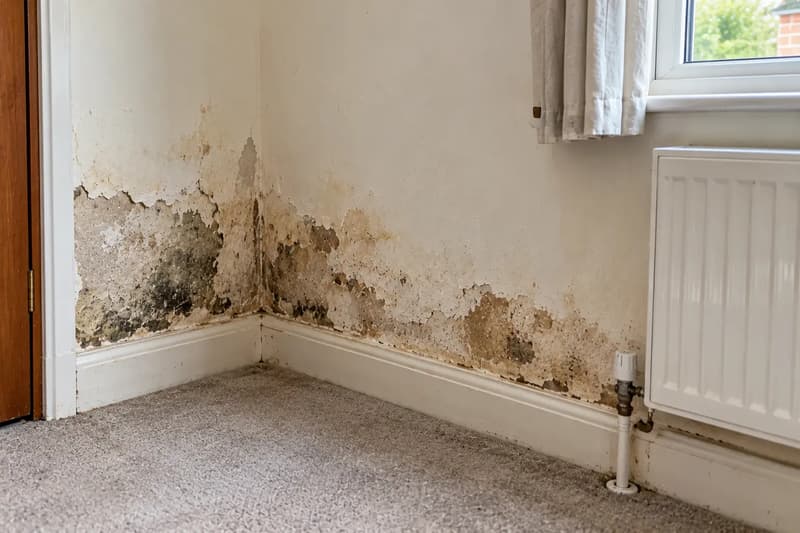
Homes from Stanmore's first suburban decades, Gordon Avenue among them, are approaching a hundred years old. That is the age at which original damp courses, ventilation and rainwater goods start to need attention. Low-level problems are covered on rising damp treatment in Stanmore.
On a house that old, the useful questions are practical. Can the original damp course still be seen, and is anything bridging it? Are the airbricks open? Do the gutters and downpipes still carry water clear of the walls? None of these settles anything alone, but together they set the agenda for the survey.
Newer homes on RAF Stanmore Park
RAF Stanmore Park shut in 1997 and the site has since become housing. Modern houses are put together differently, so the focus is on ventilation and condensation rather than ageing damp courses; see condensation control.
Well-sealed new homes give everyday moisture from cooking, bathing and drying washing fewer ways out. If mould gathers on cold walls or window frames, note how the extractor fans and heating are used. In this kind of house, routine usually matters more than the masonry.
Clay with gravel patches
Stanmore's soil is clay with outcrops of gravel. Clay keeps water close to the surface, so gullies, drains and the height of the ground against your walls are checked before any damp is diagnosed. Wider damp issues are on damp proofing in Stanmore.
After a heavy shower, look at where water sits and whether soil or paving reaches above the damp course line. On clay, sorting the drainage can change how a wall behaves without any treatment at all.
Hillside exposure
Homes on and around Stanmore Hill stand higher than most of London and catch more weather. Rain driven sideways onto a wall finds its way through weak mortar, cracked render or a failed window seal, and the damp often shows inside well away from the entry point.
If marks appear on the side of the house facing the prevailing weather, or worsen after windy wet spells, mention it. That pattern points towards penetrating damp rather than anything rising from the ground.
Lettings, HMOs and heating
Since 12 June 2026, a borough-wide Article 4 Direction on small HMOs has applied across Harrow, influencing local lettings. Landlords may find our landlord damp and mould page useful.
Census 2021 records 8.9% of Harrow households heating electrically, a figure for the borough as a whole. The Royal National Orthopaedic Hospital is one of the area's well-known landmarks.
Booking a Stanmore survey
Damp Pro and Co is led by Seth Long from 8 Manor Road, Ruislip HA4 7LB, and has more than 30 years behind it. PCA and Safeguard Ltd provided the technicians' training.
A BBA approved system is used for damp proof courses, and each one completed is issued with a 20-year guarantee certificate covering that DPC work exclusively. Our phones, 07803 253337 and freephone 0800 593 0300, are answered day and night throughout the week, or book your free survey online.
Stanmore: common questions
Is a house on the RAF Stanmore Park estate checked differently?
Yes. Newer homes get more attention on ventilation and condensation.
My Gordon Avenue house is about 100 years old. What should be checked?
Damp course, airbricks, ground levels and rainwater goods.
Does clay soil cause damp in Stanmore?
It can keep badly drained ground wet, so drainage comes first.
Does the HMO Article 4 affect my rental?
It applies to small HMOs across Harrow. Ask Harrow Council about planning.
Is Stanmore in Barnet or Hertfordshire?
Neither; it is in the London Borough of Harrow.