
Older houses and changing ground levels
Gerrards Cross has many Edwardian and interwar detached houses associated with its growth after the railway arrived. These homes may have original slate or bitumen damp proof courses, which need assessing rather than automatically replacing. Alterations made over time can also allow moisture to bypass a course that remains intact.
Around Gerrards Cross Common, St James Church and Bulstrode, the useful starting point is the individual building, not its postcode. Patios, raised beds and render plinths can bridge a DPC if they cross its level. Our Gerrards Cross area page provides local coverage information; this page focuses specifically on rising damp.
Gardens, clay and solid floors
Gravel and clay above the Misbourne valley create varied ground conditions across Gerrards Cross. Clay can retain water, while sloping plots can direct it towards a wall. Mature gardens may also conceal raised soil against the house, so checking external levels is important before deciding that a new DPC is necessary.
Extensions and replacement solid floors deserve attention in older detached homes. A floor edge or screed may form a route around the wall's moisture barrier if the floor and wall protection do not meet correctly. Ground conditions alone do not diagnose rising damp: the route from the ground into the masonry must be considered.
Diagnosing the damp before specifying work
Assessment should compare moisture readings at different heights and positions, rather than rely on one high reading near a skirting board. The survey also rules out condensation, penetrating damp and plumbing leaks before attributing the problem to rising damp. Accessible DPC levels, external ground heights and floor junctions help put the readings into context.
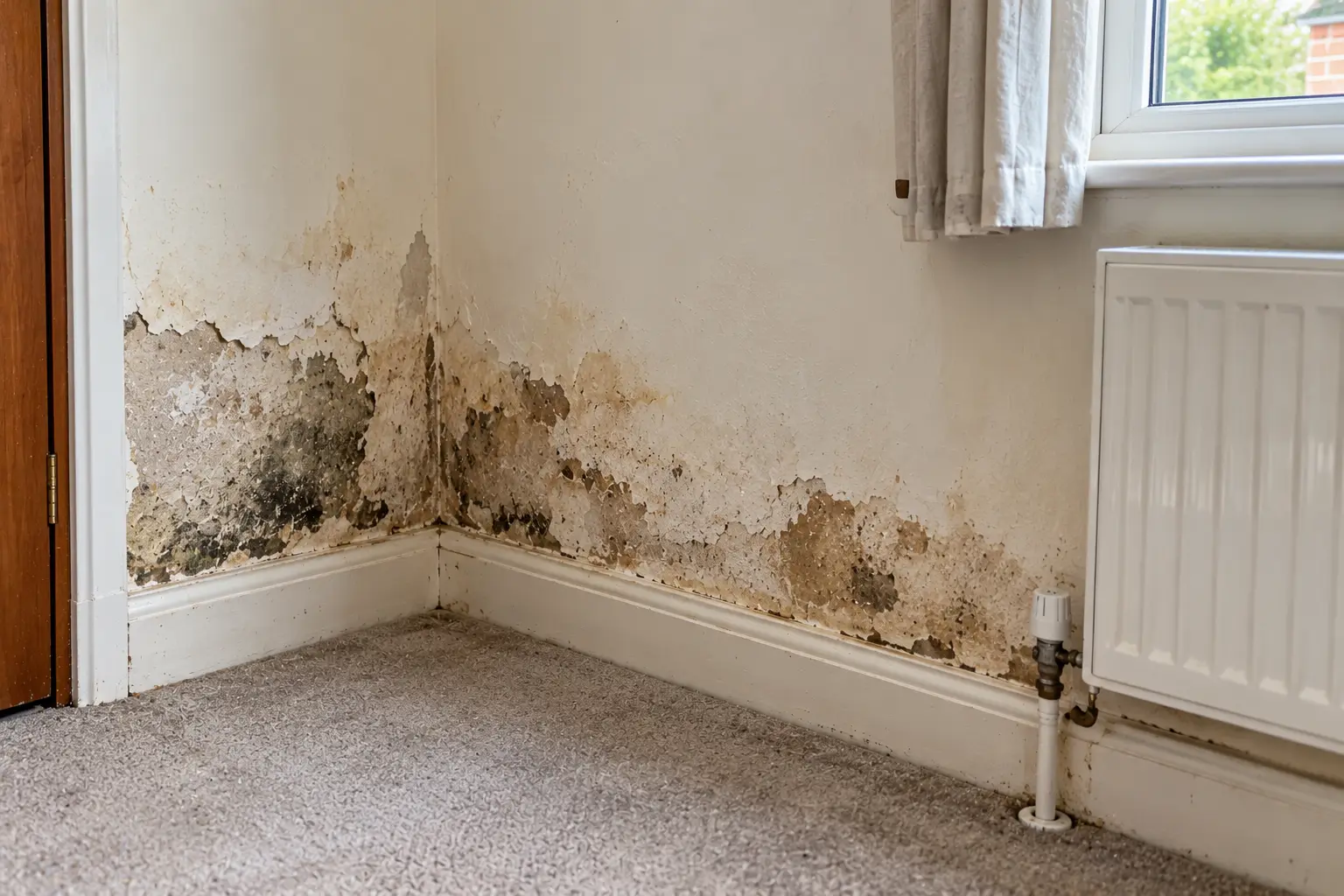
Salts and deteriorating plaster are useful clues, but a moisture meter alone cannot establish the cause because salts can affect readings. The pattern across the wall matters, alongside its construction and history of alterations. Our guide to signs of rising damp explains what homeowners can look for without removing plaster or skirting.
DPC cream injection where it is appropriate
Where assessment supports a new damp proof course, cream injection involves drilling a series of holes into a suitable mortar bed and introducing the treatment. The aim is to form a barrier against moisture rising through the masonry. Wall thickness, construction and continuity of the proposed course all influence the specification.
Damp Pro and Co uses a BBA approved damp proofing system, with PCA trained and Safeguard Ltd trained technicians. A bridged course also needs the bypassing route addressed; injection is not a substitute for correcting raised ground or an unsuitable floor junction. Read about our rising damp treatment for the broader treatment approach.
Salt-resistant replastering and drying
Ground moisture can carry dissolved salts into masonry, leaving contamination behind as water evaporates. Some salts attract moisture from the air, so existing plaster may remain troublesome after the rising moisture route has been addressed. Where necessary, affected plaster needs removing and replacing with a suitable salt-resistant replastering system.
Replastering requirements should follow the extent of contamination, not simply the visible edge of a stain. Thick walls in older Gerrards Cross houses can take time to dry, and fresh finishes should not be rushed. Allowing for drying and following the specified decorating guidance helps avoid covering a wall before it is ready.
Arrange a Gerrards Cross rising damp survey
Run by Seth Long, Damp Pro and Co is based at 8 Manor Road, Ruislip HA4 7LB, about seven miles east of Gerrards Cross. We work for homeowners and bring over 30 years' experience. Completed damp proof course work receives a 20-year guarantee certificate; that guarantee applies to DPC work, not other work.
Call 07803 253337 or freephone 0800 593 0300 to arrange a free, no-obligation damp survey. We are open 24 hours, 7 days. For the separate local service overview, visit damp proofing in Gerrards Cross.
Gerrards Cross: common questions
Does my Edwardian Gerrards Cross house need a replacement DPC?
Not automatically. An original slate or bitumen course may still function, so its condition and any bridging should be assessed before specifying another course.
Could a raised patio cause rising damp symptoms in my SL9 home?
Yes, if it bridges the DPC and gives ground moisture a route past it. Correcting the level may be more appropriate than injecting another course.
Do clay soils in Gerrards Cross make rising damp inevitable?
No. Clay may retain moisture, but rising damp also depends on the building's construction, moisture protection and any routes around that protection.
Will my interwar detached house need replastering after treatment?
That depends on the plaster's condition and salt contamination. A new DPC does not remove existing salts, so salt-resistant replastering may also be needed.
What guarantee covers DPC work at my Gerrards Cross home?
Completed DPC work comes with a 20-year guarantee certificate. This applies specifically to the damp proof course work, not replastering or other work.