
Historic masonry and Metroland floor ventilation
Pinner is in the London Borough of Harrow in north-west London, near the Hillingdon border. Eastcote next door belongs to Hillingdon, even where an address uses an HA5 Pinner postcode. Give the full street address so the property and planning authority can be identified correctly.
The High Street and Waxwell Lane conservation areas include Tudor and Georgian timber and brick buildings. Traditional fabric needs compatible, breathable treatment, with lime-based materials considered where suitable. Establish how the wall is built before assuming that a chemical damp course or modern plaster specification is appropriate.
Metroland-era homes around Cecil Park and the Grange Estate bring a different inspection angle. Where suspended timber floors and airbricks are present, check the ventilation openings and the relationship between outside ground and the damp course. A blocked opening or raised paving can matter more than the age of the house. Our rising damp treatment service explains how the diagnosis guides the work.
The Pinn corridor is not the same as Pinner Hill
The River Pinn flows diagonally through Pinner. Elevations range from around 45–60 metres to over 120 metres at Pinner Hill, and Flood Zone 2 is mapped along the river corridor. That variation makes it important to discuss the actual plot rather than describe the whole suburb as having one ground condition.
For a low-lying property, mention any flood history and how the wall changed afterwards. Flood-related wetting and groundwater exposure need considering separately from moisture rising through masonry. A flood-zone designation describes risk, not a diagnosis of the current damp patch.
Raised patios, planting beds and render crossing an existing damp course can create bridges at any elevation. Compare outside and indoor levels and consider the wall-to-floor junction. Harrow Council is the planning authority; conservation and Article 4 restrictions may be relevant to proposed alterations, so check the property-specific requirements before changing historic fabric.
Checking the evidence before recommending treatment
Diagnosis brings together the pattern of staining, plaster condition, visible salts and moisture readings at different heights. A high meter reading on its own is not proof of rising damp, because salts can affect readings. The survey also rules out condensation, penetrating damp and leaks before rising damp treatment is recommended.
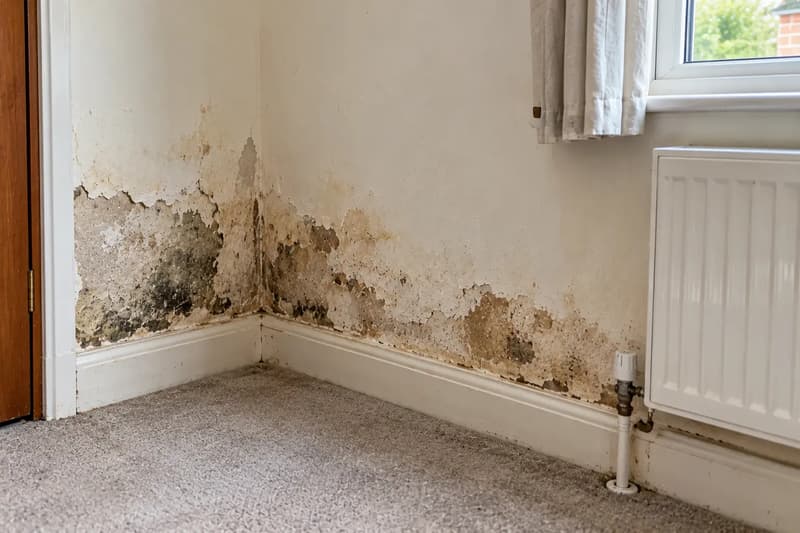
Low-level tide marks, crumbling plaster and deposits above a skirting board can support the diagnosis, particularly when considered alongside external ground levels. Tell us when the marks first appeared and whether paving or flooring has changed. Our guide to signs of rising damp explains what to note before arranging a survey.
When DPC cream injection is appropriate
DPC cream injection involves drilling a series of holes along a suitable mortar bed and introducing a damp proofing cream. The treatment forms a water-repellent barrier intended to limit moisture rising through the masonry. Wall thickness, construction and the position of an existing course influence the proposed treatment rather than a standard drilling arrangement.
Damp Pro and Co uses a BBA approved damp proofing system. Injection is not automatically the right answer for every old Pinner wall, especially where construction is mixed or historic finishes need protection. Bridging may need correcting first, and any proposal for a listed building should take relevant consent requirements into account before work begins.
Salt-affected plaster needs separate attention
Ground moisture can carry dissolved salts into plaster as it rises through masonry. Those salts can remain after the moisture route has been addressed, and some attract moisture from the air. Painting over a stained area therefore does not resolve the problem, and a new damp course does not instantly dry an already wet wall.
Where appropriate, salt-resistant replastering forms part of rising damp treatment after affected plaster is removed. The specification should suit the substrate; older solid walls and lime finishes need a different approach from modern materials. Drying and redecorating should follow the treatment advice, not a fixed timetable assumed to apply to every Pinner house.
Arrange a rising damp survey in Pinner
Run by Seth Long, Damp Pro and Co has over 30 years' experience and PCA trained and Safeguard Ltd trained technicians. Completed damp proof course work comes with a 20-year guarantee certificate; this does not cover other work. For local information, see our Pinner area page and damp proofing in Pinner.
Call 07803 253337 or freephone 0800 593 0300 to arrange a free, no-obligation damp survey. We are open 24 hours, seven days a week. Our base is 8 Manor Road, Ruislip HA4 7LB, serving homeowners across West London and South Bucks.
Pinner: common questions
Does Flood Zone 2 along the Pinn confirm rising damp?
No. It identifies a flood-risk corridor. The building’s flood history, moisture pattern, ground levels and existing course need assessment before rising damp treatment is chosen.
What differs between a Waxwell Lane historic wall and a Metroland house?
Historic timber and brick fabric may need breathable, compatible repairs. Where a Metroland house has suspended floors and airbricks, floor ventilation and bridging are useful checks. The actual construction determines the treatment.
Can a Pinner Hill address be assessed like a low-lying riverside home?
Both need individual assessment, but their settings differ. Pinner’s elevations vary substantially; explain the plot, any flooding and changes to outside levels rather than relying on the suburb name.
Does an HA5 Pinner postcode always mean Harrow Council?
No. Eastcote is in Hillingdon despite some HA5 Pinner addresses. Pinner itself is in Harrow; the full address identifies the relevant authority.
Will the DPC guarantee also cover historic plaster repairs?
The 20-year guarantee certificate applies to completed damp proof course work, not replastering or other work. Discuss suitable finishes and drying separately during the free homeowner survey.