
Why valley-side homes need careful assessment
High Wycombe’s Victorian terraces climb steep slopes above the River Wye, with many originally built to house furniture workers. Older walls may retain slate or bitumen damp proof courses that need checking for continuity and bridging. Age alone does not mean a course has failed, and replacing it should not be the starting assumption.
Water moving downhill can keep ground beside hillside walls wet, while some valley-floor properties may have a higher water table. Neither setting proves rising damp: moisture must be travelling upwards through the masonry from the ground. Our High Wycombe area page gives local coverage information; the important question here is what is happening at the base of your walls.
How ground levels can bridge an existing DPC
Patios, raised beds and accumulated soil can bring wet material above an existing damp proof course, giving moisture a route around it. Render plinths extending across the course can also create a bridge. On a sloping plot, the outside level may change substantially along one wall, so checking only beside the front door can miss the problem.
Interwar and post-war homes around Booker, Downley and Hazlemere can have bridging problems too. Replacement solid floors deserve attention where their moisture barrier meets the wall DPC: a poor junction can leave a route for moisture. Correcting a bridge may be more appropriate than injecting another course, depending on what the survey establishes.
Diagnosing rising damp before choosing treatment
Diagnosis combines moisture readings at different heights with inspection of plaster, skirtings, external levels and any visible DPC. A single high meter reading is not conclusive, particularly where salts affect the result. The survey also rules out condensation, penetrating damp and plumbing leaks before attributing the problem to rising damp.
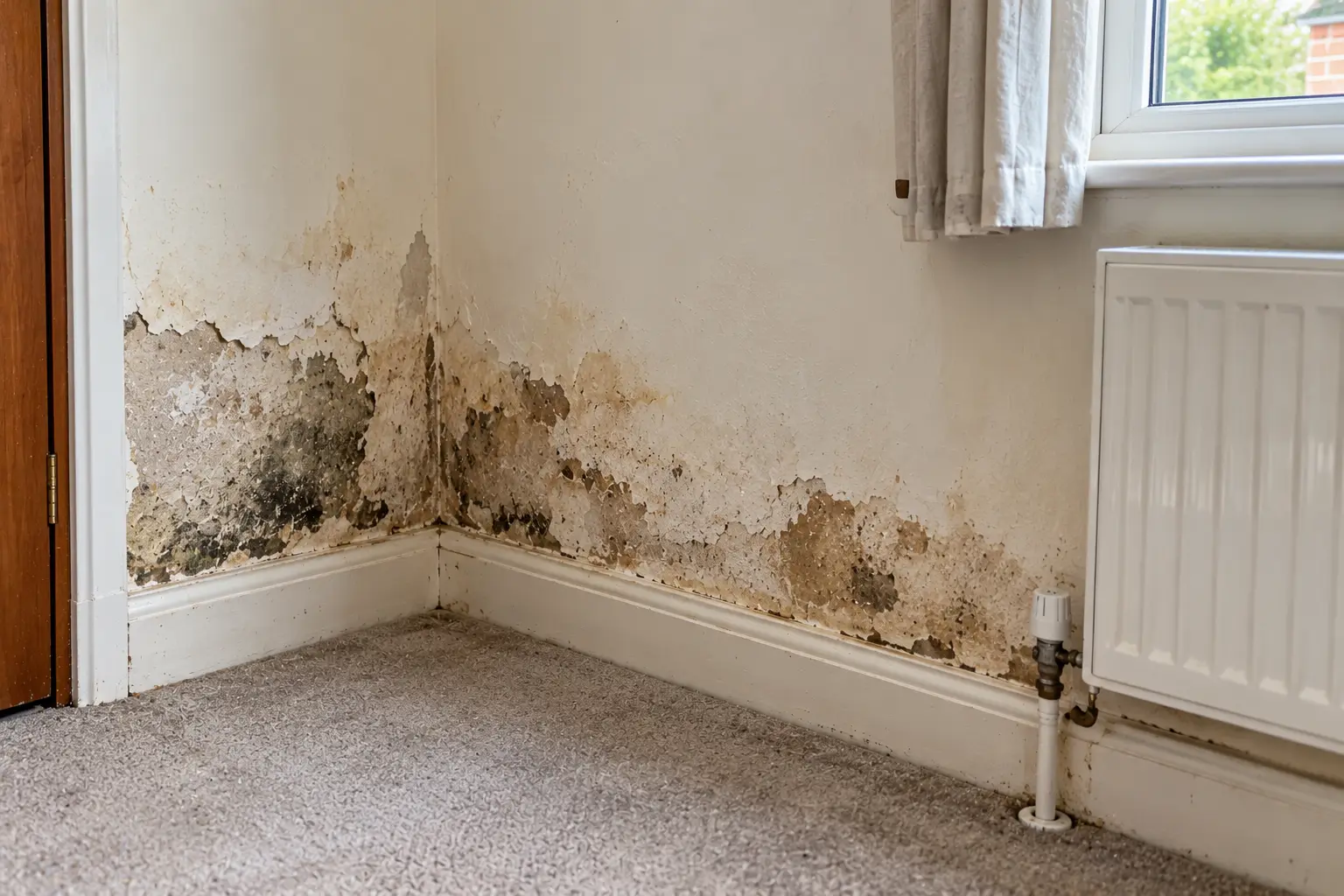
A low band of damage, deteriorating skirtings and salt deposits can help build the picture, but each finding needs context. Furniture placement and recently applied decoration can hide the extent of affected plaster. Our guide to signs of rising damp explains what to look for before arranging a visit, without treating visible marks as a diagnosis.
DPC cream injection where a new barrier is needed
Where a new chemical damp proof course is appropriate, DPC cream is injected into carefully spaced holes along a suitable mortar bed. The aim is to form a continuous barrier against moisture rising through the wall. Wall thickness, construction and changes in floor level matter when deciding the injection position and treatment detail.
Flint and brick cottages around High Wycombe can need different preparation from regular brick terraces because wall construction is less uniform. Damp Pro and Co uses a BBA approved damp proofing system, with PCA trained and Safeguard Ltd trained technicians. Read about rising damp treatment for the principles behind selecting and installing a suitable course.
Salt-resistant replastering and allowing walls to dry
Stopping moisture rising does not remove salts already carried into the plaster. Some salts attract moisture from the air, so contaminated finishes can remain marked after a DPC has been installed. Where necessary, affected plaster is removed and replaced with a suitable salt-resistant specification rather than simply covered with fresh skim or paint.
Salt-resistant replastering supports the treatment; it does not replace the need to address the moisture source. Drying time varies with wall thickness, initial wetness and finishes, so immediate redecoration is not always suitable. Our damp proofing page for High Wycombe provides the broader service context, while recommendations for your walls should follow the survey findings.
Arrange a survey at the western edge of our area
High Wycombe is at the western edge of our coverage from Ruislip. Damp Pro and Co is run by Seth Long, based at 8 Manor Road, Ruislip HA4 7LB, with over 30 years' experience. For homes around Loudwater or Wooburn Green, give your address when arranging the visit so coverage can be confirmed.
Completed damp proof course work comes with a 20-year guarantee certificate; this guarantee applies to DPC work, not other work. Call 07803 253337 or freephone 0800 593 0300 to arrange a free, no-obligation damp survey. We are open 24 hours, 7 days.
High Wycombe: common questions
Does a Victorian terrace above the Wye need a new DPC?
Not automatically. Its original course may still function, so ground levels, bridging and moisture patterns need checking before recommending injection.
Can a raised patio cause rising damp in my Downley home?
A patio can bridge the existing DPC if its level is too high. Correcting that level may be needed rather than installing another course.
Are homes near the Rye certain to get rising damp?
No. Valley ground conditions can influence moisture exposure, but proximity to the Rye does not establish rising damp or show that a DPC has failed.
Will injection remove salt marks in my High Wycombe terrace?
Injection does not remove existing salts. Contaminated plaster may need replacing with a salt-resistant specification alongside treatment of the confirmed rising damp.
What guarantee covers DPC treatment in an HP12 home?
Completed DPC work carries a 20-year guarantee certificate. That guarantee is specific to the damp proof course work and does not cover other work.