
The A40 divide: floors, courses and condensation
Northolt spreads across both sides of the A40 in the north-western corner of the London Borough of Ealing, bordering Harrow and Hillingdon. Most private housing north of the road dates from the 1920s–1930s, while social blocks to the south include development from the 1960s–70s.
In an interwar house, a suspended timber floor, airbricks and an original damp course are typical inspection points where present. Their age alone does not prove failure. Check whether later paving or render crosses the barrier and whether underfloor vents remain open before considering a replacement DPC.
In a block of flats, condensation or a leak may produce low marks without moisture rising from the ground. Across Ealing, Census 2021 records 49.5% of homes as flats or other accommodation and 34.0% of households as privately rented. These are borough-wide figures, not Northolt totals. Describe the floor level and affected rooms so ground contact and ventilation can be considered separately.
The Paddington Arm and outside wall levels
The Paddington Arm of the Grand Union Canal runs through the area. A waterside position is a moisture risk factor only; it does not establish that ground water is travelling up a wall. The damp course, adjoining paving and rainwater discharge need checking at the actual property.
Northolt Manor dates from the 14th century, while Northolt tube station serves the Central line. These location references should not be used to assume a home’s age or construction. Give your full address when enquiring. Ealing Council is the planning authority; RAF Northolt is in South Ruislip, in Hillingdon, rather than Northolt town.
A patio or flower bed raised above the existing course can create a bridge. Where a solid floor is present, its moisture barrier and connection with the wall also matter. Our Northolt area page covers household services, while damp proofing in Northolt considers rain penetration and room moisture.
Diagnosing rising damp before specifying work
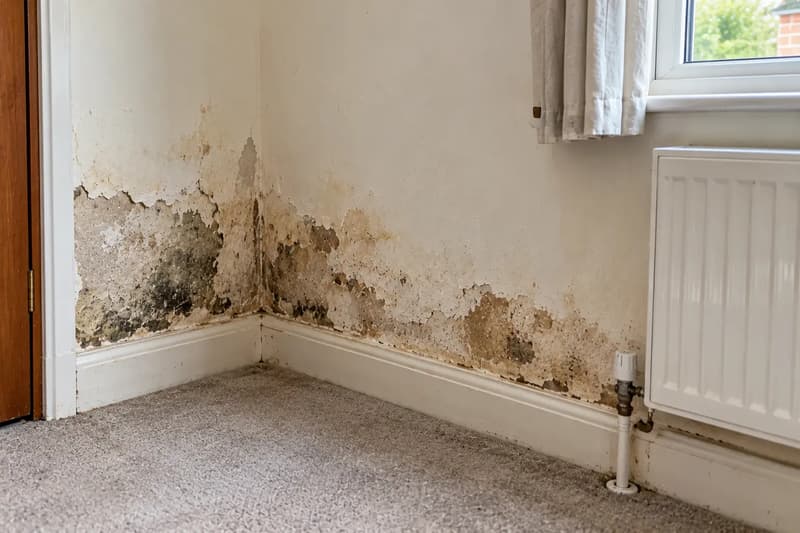
Diagnosis brings together the pattern of damage, moisture readings at different heights, wall construction and external levels. A single high meter reading is not enough: salts in plaster can affect readings, and surface decoration can hide the extent of deterioration. The survey also rules out condensation, penetrating damp and plumbing leaks.
Tide marks, damaged skirting and powdery deposits help build a picture, but none confirms rising damp on its own. Our guide to signs of rising damp explains what to look for before arranging a visit. Note when staining appeared and any changes to patios or garden levels.
DPC cream injection and removing bridges
Where diagnosis supports a new chemical DPC, cream injection introduces a water-repellent barrier into a suitable mortar bed. The drilling position and treatment pattern need to suit the wall’s thickness and construction. Damp Pro and Co uses a BBA approved damp proofing system for rising damp treatment.
Injection is not a substitute for correcting a bridge across the course. Raised soil, paving or unsuitable render details may need attention so moisture cannot bypass the treated line. Read about rising damp treatment for the purpose of a DPC and why the surrounding details matter.
Salt-resistant replastering and drying
Ground moisture can leave salts behind as it evaporates from a wall. Salt-contaminated plaster may therefore need removal and replacement with a suitable salt-resistant specification alongside DPC treatment. Skimming over affected plaster can leave the underlying problem in place.
A new course does not instantly dry the masonry, and salt-resistant replastering is not a shortcut around drying. Wall thickness, moisture levels and finishes influence when decoration is appropriate. The 20-year guarantee certificate applies to completed damp proof course work, not replastering or other work.
Arrange a Northolt rising damp survey
Our Ruislip base is at 8 Manor Road, HA4 7LB. Run by Seth Long, Damp Pro and Co has over 30 years’ experience, with PCA trained and Safeguard Ltd trained technicians.
Call 07803 253337 or freephone 0800 593 0300 to arrange a free, no-obligation damp survey. We are open 24 hours, seven days a week.
Northolt: common questions
Why compare the two sides of the A40 before choosing treatment?
The housing eras differ. An interwar house may need floor-ventilation and damp-course checks, while a later flat also needs assessment of condensation and leaks. The era guides inspection, not the diagnosis.
Can low staining in a flat south of the A40 be condensation?
Yes. Condensation and leaks can affect lower walls too. Establish the flat’s floor level, ground contact and moisture pattern before recommending a DPC.
Does the Paddington Arm mean canal-side homes need injection?
No. Canal proximity is background risk context. Evidence from the wall, existing barrier and outside levels is needed before specifying rising damp treatment.
Which council covers a Northolt property rather than RAF Northolt?
Northolt town is in Ealing, where Ealing Council is the planning authority. RAF Northolt is in South Ruislip in Hillingdon; provide the full address to avoid confusion.
What happens to salt-affected finishes after Northolt DPC work?
Existing salts may require suitable replastering, and the masonry still needs time to dry. The 20-year guarantee certificate covers completed DPC work, not replastering or other work.